Half-Day Tuscan Farm Trip From Florence: Transport, Timing And What To Pack
Updated November 3, 2026
A tuscan farmhouse cooking class is a 5-hour, half-day outing: about 30 minutes of driving each way in an included transfer, roughly 3 hours of cooking and eating at the farm, and a return to central Florence with time for dinner elsewhere.
 By Andrea Bianchi, Florence pasta-making instructor
Short answer
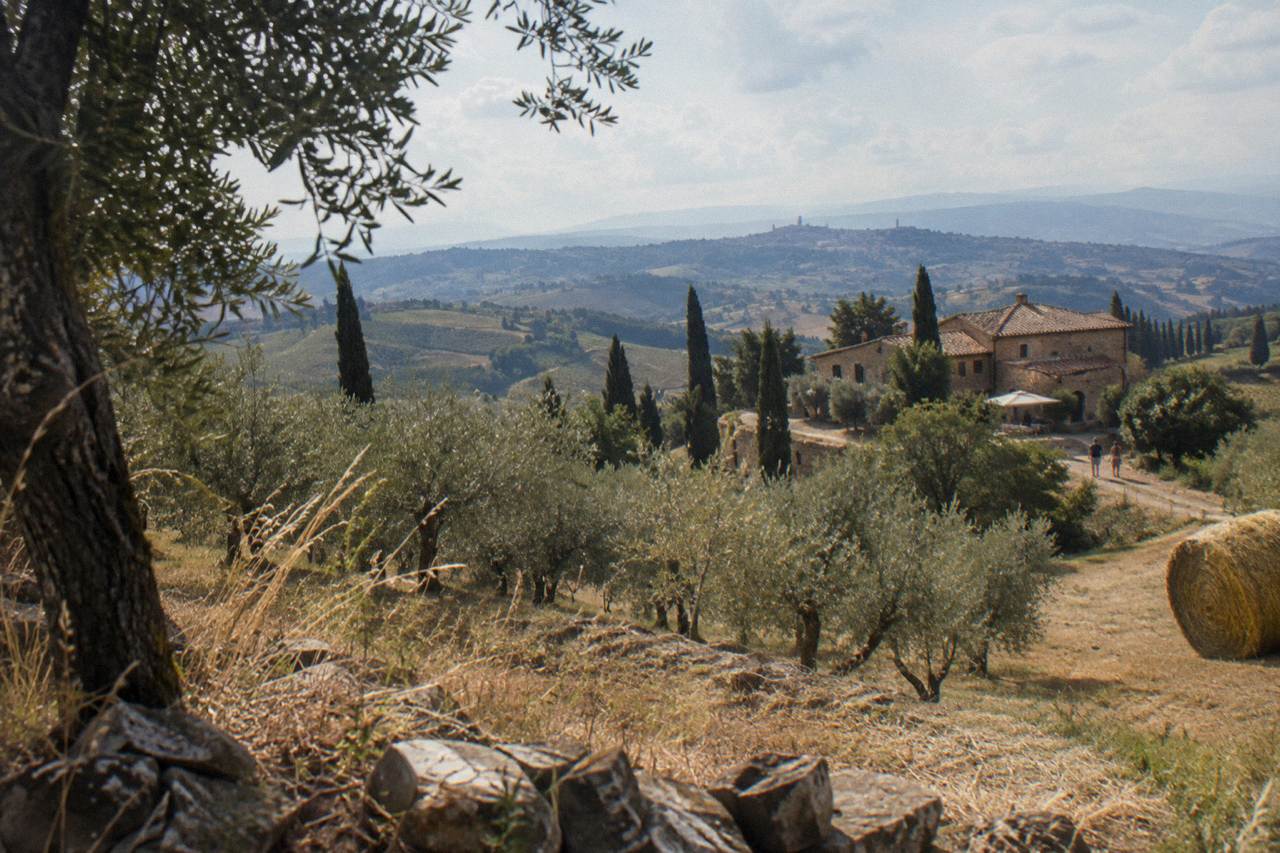
The featured farmhouse class from Walkabout Tours runs 5 hours total, from $93 per person, rated 4.9 across 1,737 reviews, with transport from Piazza della Stazione to the farm and back included. The drive to the farm runs 15 to 30 minutes each way depending on traffic, leaving about 3 hours on site for pizza or pasta, gelato and lunch.
A half-day trip to a Tuscan farm from Florence fits inside 5 hours: door-to-area pickup in the city center, a drive of roughly 15 to 30 minutes each way depending on where your farm sits and what traffic on the Florence ring road is doing, and around 3 hours on site to roll pasta or stretch pizza dough, churn gelato and sit down to what you made. The featured option on this site, the pizza or pasta & gelato at a Tuscan farm run by Walkabout Tours, costs from $93 per person and is rated 4.9 across 1,737 reviews, with transport included both directions.
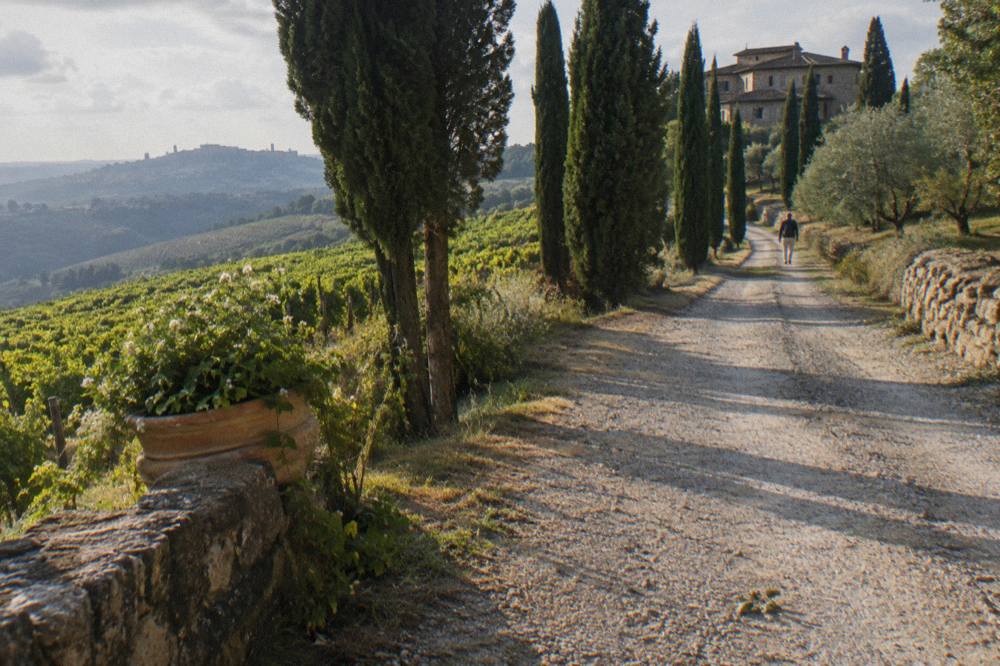
That price sits above the city-center classes for a reason: you are paying for the vehicle, the driver, and a working farm setting rather than a central kitchen. City equivalents such as the pasta class with unlimited wine start from $40 per person, rated 4.8 across 17,143 reviews. The farm class is not a better or worse class, it is a different half-day. For the full flavour of what the hills version offers beyond the cooking itself, the companion piece on Tuscan farmhouse cooking classes from Florence walks through the day in detail; this page stays on the logistics.
How Does A Half-Day Tuscan Farm Trip From Florence Work?
The format is fixed: meet at a central Florence point or get picked up in a defined zone, ride a minibus or van 15 to 30 minutes into the hills, spend about 3 hours at the farm cooking and eating, then ride back to the city with the same transport. Total elapsed time runs about 5 hours, and every operator in this category includes the round-trip transfer in the ticket price rather than billing it separately.
Walkabout Tours, the operator behind the featured farm class, structures the day as cooking first, eating second. You choose pizza or pasta as your track when you book, work through the dough and the toppings or the fillings with the instructor, then finish with a gelato demonstration and a seated meal of everything you produced. The operator reports wine is served with lunch; how much matters less than the fact that you should plan not to drive yourself afterward, which is one more argument for taking the included transfer instead of a rental car.
The drive itself is short by Tuscan standards. Travel reviews of this class place the farm roughly 25 minutes outside the city, which matches the operator's stated 15 to 30 minute each-way range once you allow for pickup stops. Nobody on this trip crosses Chianti; the farms used for half-day classes sit close enough that transport time stays under an hour of your five.
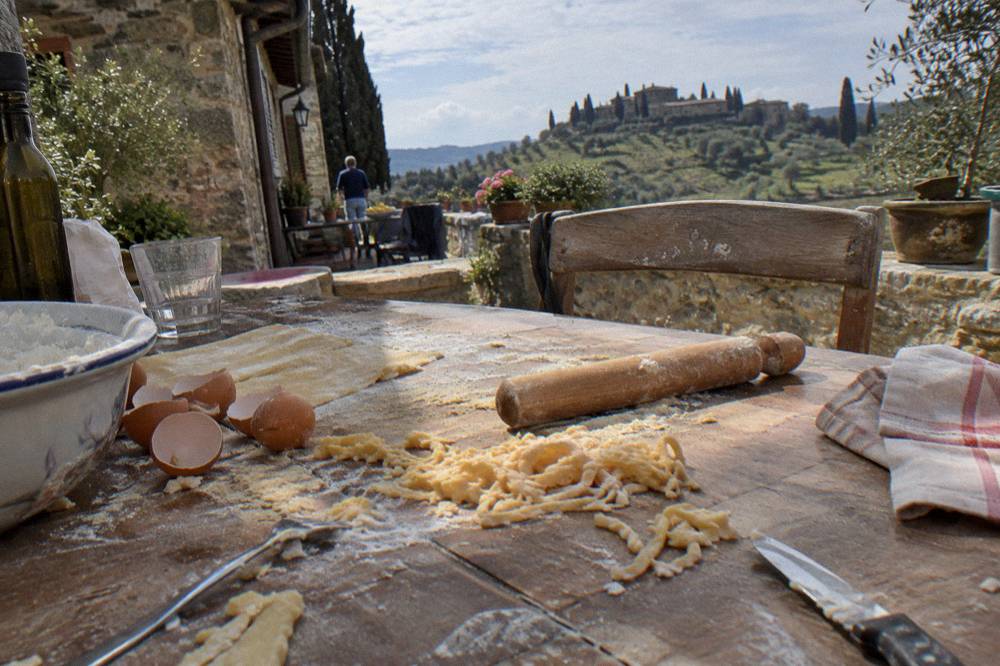
What you trade for the drive is space and setting. A central Florence kitchen like the 360 Cooking Class Experience on Borgo Pinti, about a 10 minute walk from the Duomo, runs 2.5 hour classes from EUR 75 per person in a compact professional kitchen; the farm gives you outdoor tables, olive trees if the season is right, and room the city kitchens simply do not have. Whether that trade suits you is the question farm cooking class or city class from Florence answers in depth.
What Does The Timing Look Like Hour By Hour?
On a typical afternoon departure you leave Florence around 14:30, arrive at the farm by about 15:00, cook from roughly 15:00 to 16:30, sit down to eat until about 17:45, and are back in central Florence by 18:00. Morning departures shift everything earlier in the same pattern: out around 09:00, back around 14:00, in time for a late lunch or an afternoon museum slot.
The exact clock times vary by season and by how many pickup stops your van makes, so treat the table below as the shape of the day rather than a schedule to set a watch by. The one fixed element is the total: 5 hours from meetup to drop-off, per the operator's listing.
| Segment | Approximate time (afternoon departure) | What happens |
|---|---|---|
| Meetup and pickup | 14:30 to 15:00 | Central Florence meeting point or pickup zone |
| Drive to the farm | 15:00 to 15:30 | 15 to 30 minutes each way, traffic dependent |
| Hands-on cooking | 15:30 to 17:00 | Pizza or pasta track, then gelato demonstration |
| Seated meal | 17:00 to 18:00 | Eat what you cooked, wine served with lunch |
| Return drive | from 18:00 | Drop-off near the original meeting area |
Two planning notes fall out of that shape. First, the meal lands at an off hour: an afternoon departure eats at what Italians would call merenda time, so a light or late breakfast serves you better than a big lunch beforehand. Second, the return in the early evening leaves your night open, which is why this format works as a half-day rather than a full-day commitment. If you are weighing whether even 3 hours is more class than you want, the write-up on how long a cooking class actually runs covers the duration question across formats.
Booking windows matter more than clock times. US search demand for cooking classes in Florence peaks March through May and drops to its lowest in December, so spring dates on the farm class fill earlier and the cheaper time slots go first. Book two to three weeks ahead in peak spring, and you can often go same-week in November or January.
What Should You Pack For A Farm Cooking Class?
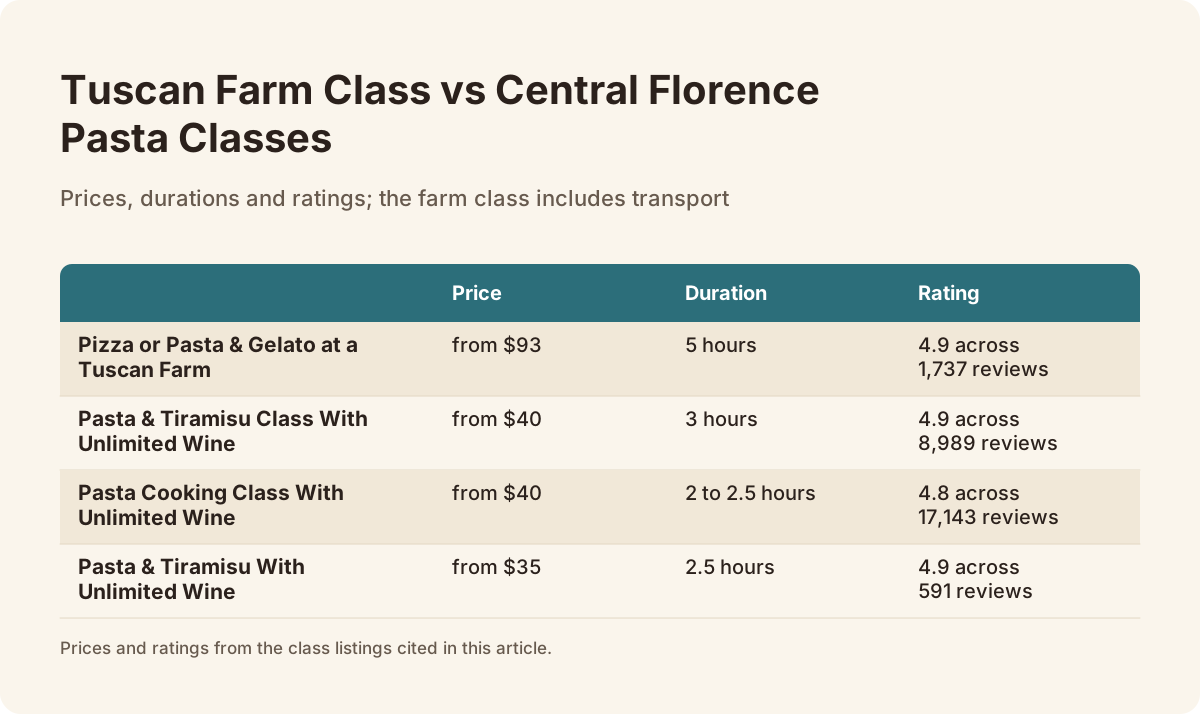
Pack closed, comfortable shoes with grip, one warm layer for the return drive, a small bag for leftovers or recipe cards, and sunscreen or a hat for the outdoor portions at the farm; leave heels, loose sleeves and dangling jewellery out, since dough, flour and farm paths do not cooperate with any of them. The operator provides aprons and all equipment, so you carry clothes and almost nothing else.
The farm setting changes the packing math versus a city class in three ways. The ground is gravel, grass or packed earth rather than polished tile, so flat shoes with some tread are the difference between a relaxed walk from van to table and a careful one. Parts of the class and most of the meal happen outside or in open-sided barns, and hills evenings cool down quickly even after a warm afternoon, so the layer earns its space in your bag. And you are further from your hotel than a city class would put you, about 25 minutes, so anything you forget is genuinely forgotten until the drop-off.
| Item | Why it matters on a farm class | Needed on a city class too? |
|---|---|---|
| Flat closed shoes with grip | Gravel and earth paths between van, kitchen and table | Helpful, less important on tile |
| Warm layer for the return | Open-air terraces cool fast in the hills, especially spring and autumn | Rarely |
| Sunscreen or hat | Outdoor waiting and eating areas in warmer months | Only for terrace venues |
| Small day bag | Recipe cards, any leftovers, a water bottle for the drive | Yes |
| Hair tie | Hands stay in flour through the whole cooking block | Yes |
| Camera or phone strap | Photo stops at the farm view before cooking starts | Optional |
Clothing specifics, including what not to wear near an open oven or a pizza station, are covered in detail in what to wear to a cooking class in Italy. The short version for the farm: nothing you would be upset to find flour on.
What Does A Half-Day Farm Trip Cost Versus A City Class?
The featured farm class with transport runs from $93 per person for 5 hours; central Florence pasta classes run from $35 to $58 per person for 2 to 3.5 hours without transport. The premium of roughly $40 to $55 per person buys the vehicle, the driver, the farm setting and the gelato course, so the value question reduces to whether the hills are worth about the price of a Florentine dinner to you.
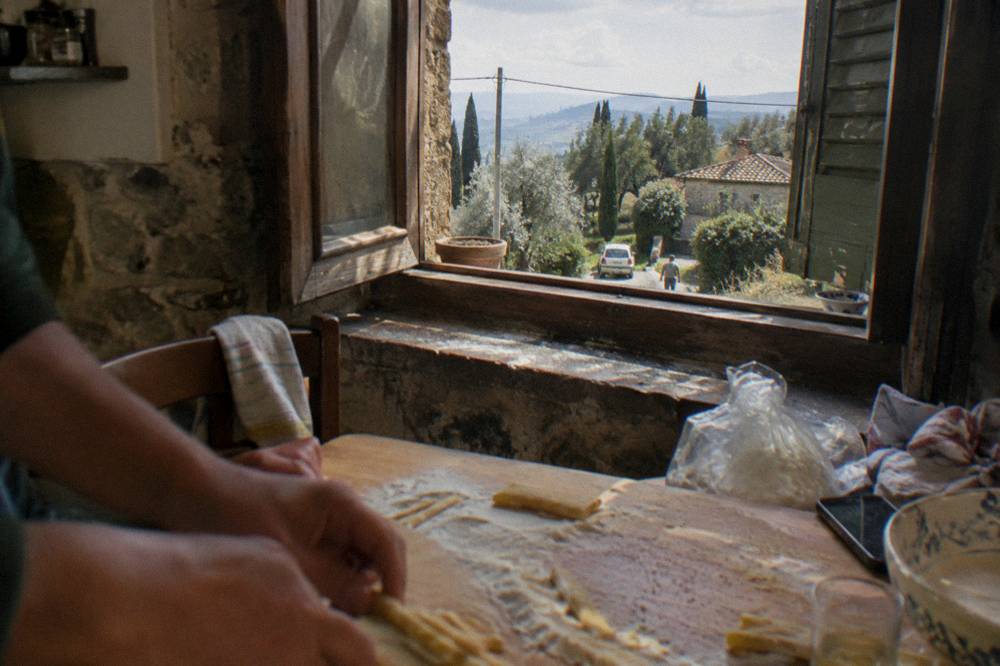
Set the tour list side by side and the tiers are obvious. Each price below is the bookable listing price per person, with each tour's rating and review count beside it.
| Class | Setting | Duration | Price | Rating |
|---|---|---|---|---|
| Pizza or Pasta & Gelato at a Tuscan Farm (Walkabout Tours) | Farm, transport included | 5 hours | from $93 | 4.9 across 1,737 reviews |
| Pasta & Tiramisu Class With Unlimited Wine (Cooking Italy) | Central Florence | 3 hours | from $40 | 4.9 across 8,989 reviews |
| Pasta Cooking Class With Unlimited Wine (Florence with Elvis) | Central Florence | 2 to 2.5 hours | from $40 | 4.8 across 17,143 reviews |
| Pasta & Tiramisu With Unlimited Wine (Rosso Crudo) | Central Florence | 2.5 hours | from $35 | 4.9 across 591 reviews |
On a cost-per-hour basis the farm class is actually competitive: the 5-hour format spreads the higher ticket across twice the time of a city class, so the premium per hour of experience is narrower than the sticker prices suggest, and the transport you would otherwise pay for separately, a taxi or a rental car day, is inside the ticket.
Optional costs stay modest. Tipping at Italian cooking classes is genuinely optional, with operator-published examples in the EUR 10 to 15 per person range at the top end of what hosts see; nobody expects it and the class does not change without it. If your half-day also includes market shopping, the Mercato Centrale food hall, open daily into the late evening per its official site, is where many travellers grab supplies or a snack first, and the mercado centrale guide maps the building floor by floor.
Which Departure Time Should You Pick: Morning Or Afternoon?
Pick the morning departure if you want the farm in cooler air and a free evening, and the afternoon departure if you want a relaxed morning and do not mind eating your main meal in the early evening; both follow the same 5-hour arc, so the choice is about your appetite schedule, not the class quality.
The afternoon slot pairs well with a morning at the Uffizi or the Duomo, since central sights open early and the class meetup falls mid-afternoon. The morning slot pairs better with a market stop beforehand: Sant'Ambrogio, open Monday to Saturday from 07:00 to mid-afternoon per its official site, is about a 20 minute walk from the Duomo and gives you a genuinely local food floor to wander before the cooking starts. Travellers on Reddit keep asking about that market as the locals' alternative to the bigger central one, and the answer holds: fewer tourists, same produce logic, and it opens early enough to fit before a 09:00 meetup if you start at 07:30.
One constraint to respect: the return drive in the early evening runs into Florence's rush. The operator's 15 to 30 minute each-way range assumes normal traffic; allow a little slack if you have a hard evening reservation. And if the whole half-day still feels like more commitment than you want, the alternative comparisons on Pasta Making Course Florence cover shorter central formats down to 2 hours.
For travellers who like the cooking but not the drive, the city fallbacks in the trio below start from $40 per person and keep you within walking distance of your hotel. The pasta and tiramisu combination from Cooking Italy, rated 4.9 across 8,989 reviews over 3 hours, is the closest city match to the farm class's pace, unlimited wine included.
Common Questions About A Half-Day Tuscan Farm Trip
How does a half-day Tuscan farm trip from Florence work?
You meet at a central Florence point, ride an included transfer 15 to 30 minutes into the hills, spend about 3 hours cooking and eating at the farm, and ride back. Total time is about 5 hours, and the transport is part of the ticket price.
How long is the drive to a Tuscan farm from Florence?
Between 15 and 30 minutes each way depending on traffic and pickup stops, with travel reviews placing the featured class's farm roughly 25 minutes outside the city. The drive never crosses deep into Chianti.
What should you pack for a farm cooking class?
Closed flat shoes with grip, a warm layer for the return, sunscreen or a hat in warm months, and a small day bag. Aprons and all equipment are provided, so you carry almost nothing.
Is a farm cooking class worth it compared with a city class?
The farm class runs from $93 per person for 5 hours with transport, versus from $35 to $58 for 2 to 3.5 hour city classes. The premium buys the vehicle, the setting and the gelato course, and per hour of experience the gap is narrower than the sticker prices suggest.
Do you eat what you cook on the farm class?
Yes, the operator's format is cooking first, then a seated meal of everything you made, with wine served at lunch and a gelato demonstration before you eat.