What's The Difference Between A Culinary School And A Cooking Class?
A culinary school trains professionals over months. A visitor cooking class offers a single hands-on meal; compare its purpose with a chef-led workshop.
 By Andrea Bianchi, Florence pasta-making instructor
The confusion starts on the booking page. Plenty of Florence operators call themselves a cooking school, and travellers reasonably assume that means terms, tutors and a certificate. Then they arrive, tie on an apron, roll pasta for two hours and sit down to lunch with strangers. Nothing was wrong with the afternoon. The word was doing different work than they thought.
At A Glance: A visitor class is a single cooking experience; the chef workshop offers three hours of pasta practice, not a professional qualification. Explore Michelin-Trained Chef Pasta Class in Florence
A culinary school and a cooking class share a kitchen and almost nothing else. One is training. The other is an experience that happens to involve flour.
What Is A Culinary School Actually For?
Producing professional cooks. A culinary school runs over months or years, teaches a sequence that builds from knife work to service under pressure, assesses what you have learned, and ends with a qualification you can put on an application. The output is a career, not a dinner.
The structure gives it away. Professional programmes run on repetition and progression: you do not make one dish, you make the same cut a hundred times until your hands stop thinking about it. There is a syllabus, there are instructors who fail people, and a kitchen brigade to slot into afterwards. Tuition is billed across a whole programme, an order of magnitude away from anything on a tourist booking page.
None of that is what a traveller in Florence for four nights is shopping for. If you want the career, you apply to a school. If you want the afternoon, keep reading.
What Do You Actually Get In A Three-Hour Class?
A visitor class is a single hands-on experience with a meal, rather than a qualification. Checked city formats range from 2 to 3.5 hours; the menu, recipes and equipment depend on the operator.
The class is designed around one arc: make a thing, cook it, eat it. Everything else keeps that arc moving inside a single afternoon, which is why dough rests get filled with a sauce or a dessert rather than a lecture. How the three hours are spent breaks that arc down by the clock.
This is where the word "school" gets slippery. Florence operators that call themselves cooking schools run visitor sessions, not diplomas: one publishes its 2026 hands-on pasta and Tuscan menu dates the way a theatre publishes a season, and a home-cooking network lists active 2026 Florence classes the same way. Both are excellent. Neither is a culinary academy.
Wider pricing backs that up. Half-day group classes across Florence, Rome and Bologna run €80 to €150 per guest in 2026 for three to four hours with the meal, which is experience pricing rather than tuition. City by city, what a class costs across Italy has the rest of the numbers.
Where Does The Chef-Led Masterclass Sit Between Them?
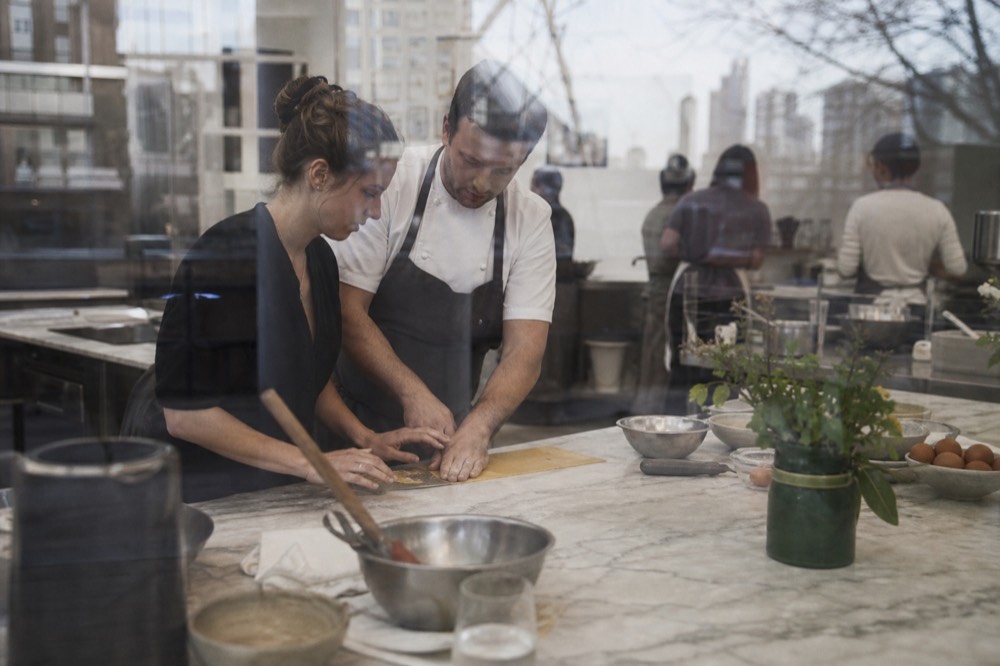
The chef-led workshop is a visitor experience with focused pasta practice: three hours, up to 13 participants, an apron to keep and a recipe e-book. It is shared, not private, and does not provide professional certification.
| Culinary school | Cooking class | Chef-led masterclass | |
|---|---|---|---|
| Purpose | train a professional | give you an experience | teach one technique properly |
| Length | months or years | 2 to 3.5 hours | 3 hours |
| Group size | a cohort with a syllabus | not published on most listings | capped at 13 |
| What you leave with | a qualification | a good afternoon and a full stomach | apron to keep, recipe e-book, a full meal |
| Assessment | yes, you can fail | none | none, but you get corrected |
| Cost | tuition over a programme | Check the selected class quote | Check the selected date |
| Booking | an application | Check the selected booking terms | Check the selected booking terms |
| Best for | people changing career | first-timers, groups, families | home cooks who want it to stick |
Group size is one useful clue to the amount of instructor attention, but it does not guarantee the teaching style. The chef workshop publishes a ceiling of 13 participants and remains a shared visitor class.
Which One Should You Actually Book?
Book a culinary school only if you want the qualification. Book a standard class if you want three hours, a plate you made and a lot of wine. Book the masterclass if you intend to make pasta again at home and want someone to fix your technique while the dough is still in front of you.
A standard city class suits visitors who want a hands-on meal without formal training. Compare what you cook, the total duration and your date-specific quote instead of treating review volume as a guarantee. Related reading: the class that wins on the numbers.
The case for a chef-focused class is more guided practice, a published smaller group and recipes to use again. It remains one session, so choose it for the specific skills you want to practise. Related reading: the chef-led and private seats, when the chef-led upgrade pays off.
If the whole idea still feels like a tourist purchase, whether a class is worth the slot takes that objection seriously.
The useful test is what you want afterwards: a qualification, a memorable meal or more confidence making pasta at home. Match the programme or class to that outcome and compare current quotes. Related reading: Every Florence class compared side by side, the entry-level classics.