How Much Does A Cooking Class In Italy Cost?
Compare historical Italian cooking-class price ranges with current Florence formats, inclusions and extra charges before checking your party quote.
 By Andrea Bianchi, Florence pasta-making instructor
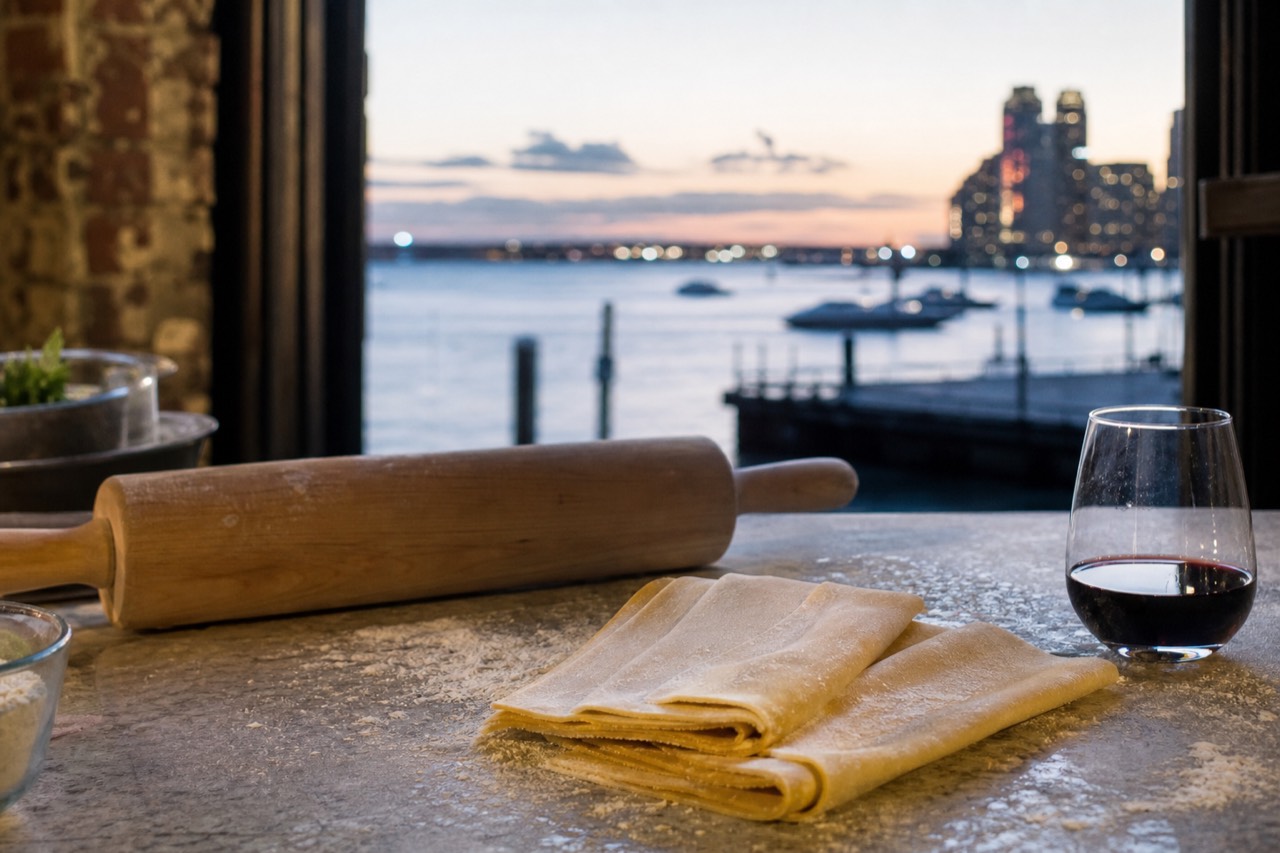
Flour on a marble counter, a glass of wine and a meal made by the group: similar cooking-class descriptions can conceal very different menus, durations, settings and prices. Compare those details before treating two quotes as equivalent.
At A Glance: Compare your current party quote with what is included: Rosso Crudo covers pasta, tiramisu, the meal and unlimited wine. Explore Florence Pasta & Tiramisu Cooking Class with Unlimited Wine
Prices split three ways: by city, by setting, and by how much of your day the operator buys on your behalf.
What Does A Cooking Class In Italy Cost In 2026?
Half-day group classes at city cooking schools in Florence, Rome and Bologna run €80 to €150 per guest in 2026 for three to four hours including the meal. Venice runs €90 to €180, Sorrento and Positano €120 to €250, and a private villa class for a party of six works out at €110 to €180 each.
| Setting | 2026 price per guest | What the fee covers |
|---|---|---|
| City school, Florence / Rome / Bologna | €80-€150 | 3-4 hours, hands-on cooking plus the meal |
| Venice group class | €90-€180 | Half day, group format |
| Bologna group class (city-level analysis) | €90-€160 | Half day, group format |
| Sorrento and Positano | €120-€250 | Half day, coastal setting |
| Private class at a villa, party of six | €110-€180 | Half day, chef comes to you |
Those bands come from a 2026 review of Italian cooking schools by a private-chef service that prices this category for a living, with Venice and Bologna from the same firm's city-by-city breakdown. Two things stand out. The Amalfi Coast charges sea-view money for the same dough. And the private villa tier only beats a group class per head once the party is large enough to spread the chef's day rate.
The cited local Florence guide pages describe another segment of the market: independent schools with their own premises and calendars. Compare current quotes for the same party and currency rather than assuming a fixed price ratio. Related reading: local Florence guide pages.
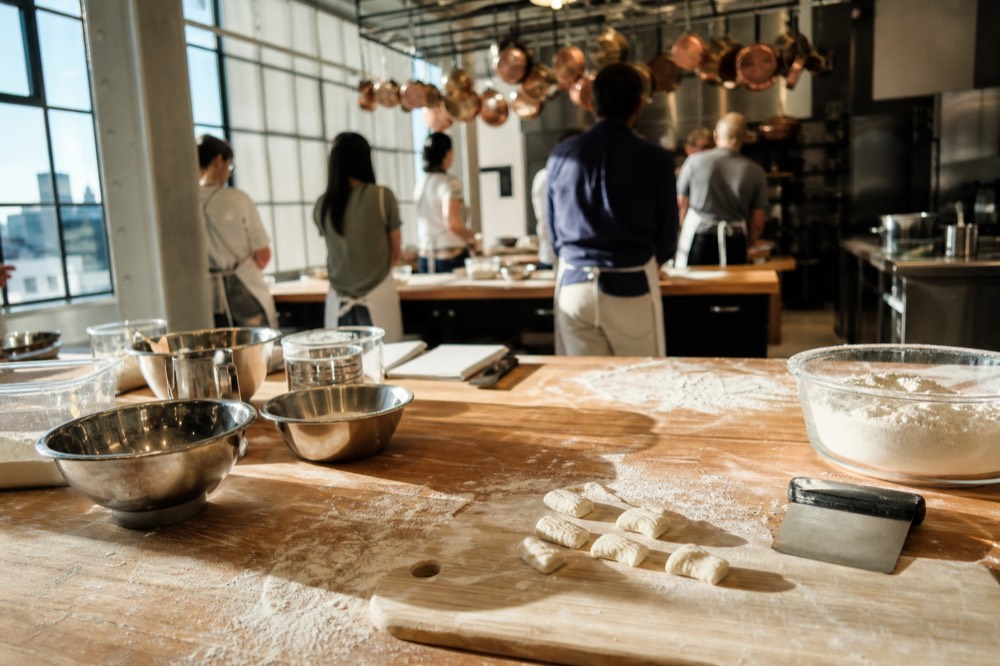
How Much Are Pasta Making Classes In Italy?
A straightforward city pasta class avoids the transport and extra itinerary of a countryside or market experience, but it is not automatically the cheapest available option. Florence with Elvis advertises 2–2.5 hours; Rosso Crudo combines pasta and tiramisu in 2.5 hours. Compare current party quotes.
Cooking classes in Italy are not one product. A pasta class is a single-skill session: dough, shapes, sauce, plate, eat. A full regional menu class adds an antipasto, a second course and dessert, plus another hour on the clock. A market class buys a guide's time in a food hall before the kitchen door opens.
Adding dessert changes the skills taught as well as the meal. A market visit adds a separate guided activity, so its value depends on whether that extra experience interests you.
If the real choice is a city rather than a class, the Rome versus Florence comparison and which Italian city gives the best class value take the decision apart by what the fee buys.
Why Does Florence Come In Under The National Bands?
The historical Florence shortlist includes different menus, settings and group sizes, so its prices are not directly interchangeable with the city-school bands. Review volume alone does not explain pricing. Use the table to identify formats, then compare current quotes for the same date and party.
Use the table as a historical comparison, not a live quote. The chef class’s verified difference is its shared maximum of 13 guests; the gluten-free class offers gluten-free pasta making, but a dedicated kitchen and celiac-safe cross-contact controls are not established.
A straightforward city class may be enough when pasta making is the priority. The unlimited-wine classics compared side by side illustrate differences in menus and duration without adding a countryside excursion. Related reading: the unlimited-wine classics compared side by side.
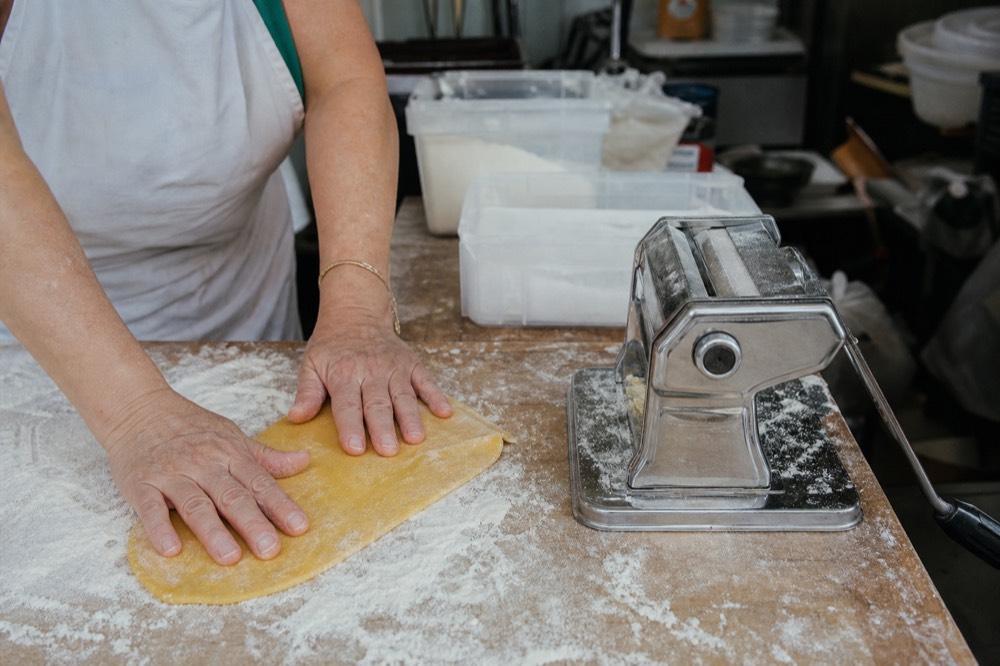
What Actually Pushes The Price Up?
Useful reasons to pay more include a market visit, a smaller group with chef guidance, countryside transport or a different menu. The price difference depends on your date and selected option; a gluten-free listing alone does not establish a dedicated kitchen.
The market option adds a Central Market visit and tastings before preparing lasagna and tiramisu. Select that option specifically: the separate fresh-pasta option does not include the market. Classes that start at a Florentine market explain the format, while what the stalls at Mercato Centrale sell helps distinguish the guided experience from visiting independently. Related reading: classes that start at a Florentine market, what the stalls at Mercato Centrale sell.
The Michelin-trained chef class is a shared experience with a published maximum of 13 guests over three hours. A smaller group is different from an exclusive booking; what a private chef costs in Florence explains that separate choice. Related reading: what a private chef costs in Florence.
The Tuscan farm class includes transport from a Florence meeting point to the farmhouse and back, with 5–7 hours advertised depending on the option. Choose pasta or pizza; gelato is included in either format. The setting and transport are the reason to compare it with a city lesson.
The gluten-free class teaches three gluten-free pasta types with wine, water and sodas. Its listing does not establish a dedicated kitchen or celiac-safe cross-contact controls, and transport or luggage storage should not be assumed included. Other intolerances require advance discussion and may involve an additional charge.
Which Price Tier Should You Actually Book?
If you want pasta making and an included meal, start with the straightforward city classes. Pay more when a verified difference matters to you: a market visit, chef guidance in a smaller group or a countryside outing. Price alone does not establish teaching quality.
Instruction, ingredients and equipment form the core of these experiences, but inclusions are not identical. Compare who teaches, group size, the menu, drinks and any transport or required extra charges.
At similar current prices, compare the menu, duration, venue and recent written reviews. Review volume alone does not determine which class is better for your party.
Check the complete price and exclusions for the selected option. Pastamania’s current listing specifies a €20 payment to the Cultural Association, so a headline price is not always the full cost. Whether a tip belongs here at all is a separate question from mandatory charges. Related reading: whether a tip belongs here at all.
Read the selected option’s cancellation deadline before booking; free cancellation is conditional, not a promise that every change costs nothing. Whether the format earns its price helps assess the experience, and every Florence class on one page compares the available formats. Related reading: whether the format earns its price, every Florence class on one page.