What To Buy In Florence Markets Month By Month
Updated November 3, 2026
Florence market stalls change almost completely from month to month, and buying what is actually in season is the difference between a memorable ingredient and an expensive disappointment. Here is what reaches the stalls each month, which market to shop, and how to turn it into dinner.
 By Andrea Bianchi, Florence pasta-making instructor
Short answer
Porcini and chestnuts run September to October, olio nuovo lands in late October and November, and spring artichokes peak March to May. Mercato Centrale and Sant'Ambrogio open Monday to Saturday and close Sunday. A market tour with a cooking class runs about $77 per person for 3 hours.
What To Eat In Florence By Month
Florence market stalls follow the Tuscan harvest, not a supermarket calendar: white truffle and porcini arrive with the first autumn rains in September, chestnuts and fresh-pressed olive oil fill October and November, and artichokes, asparagus and peas take over from March through May. Summer belongs to tomatoes, courgettes and stone fruit. Buying at peak means lower prices and better flavor, and the stallholders at both main markets will tell you plainly what came in that morning. Anyone searching what to eat in Florence should start with the season, because half the city's best food is only on the stalls for six or eight weeks a year.
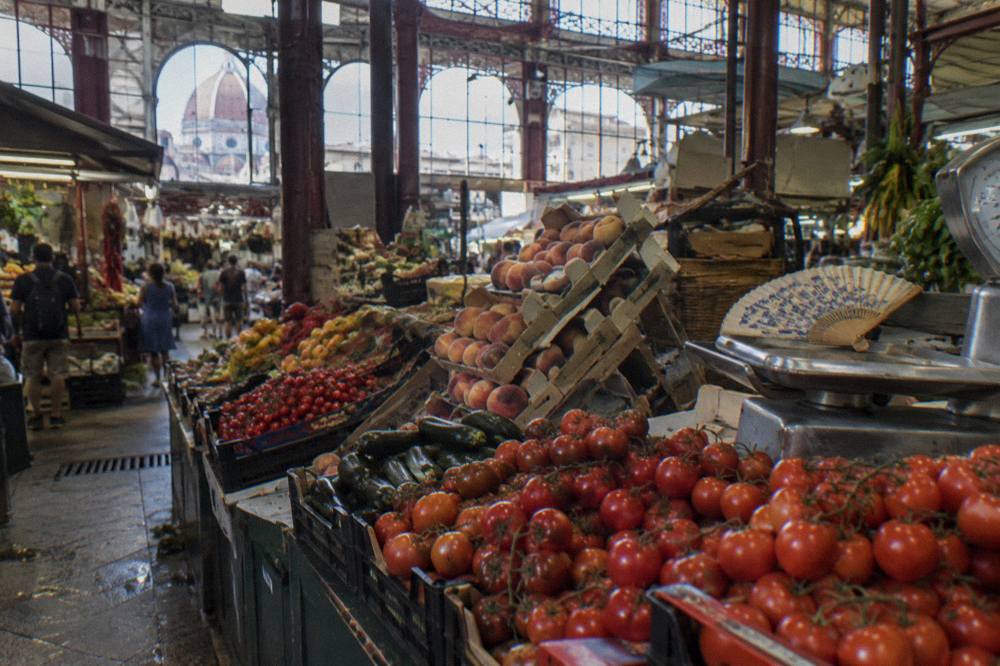
The full month-by-month picture looks like this. Sources are the seasonal produce calendar published by Out of the Box Florence's month-by-month Tuscany guide and the two markets' own published hours.
| Month | On the stalls | Notes for shoppers |
|---|---|---|
| January | Cavolo nero, radicchio, leeks, oranges | Hardy winter greens, best in soups like ribollita |
| February | Cavolo nero, fennel, artichokes begin | First artichokes appear late in the month |
| March | Artichokes, asparagus, spring onions | Artichoke season opens properly |
| April | Artichokes, peas, broad beans, asparagus | Peak spring; peas and pecorino is a classic pairing |
| May | Artichokes taper, courgette flowers, strawberries | Last good artichoke month |
| June | Tomatoes, courgettes, cherries, apricots | First true summer tomatoes |
| July | Tomatoes, peppers, melons, figs begin | Peak tomato month, panzanella weather |
| August | Peppers, aubergines, melons, figs | Many stalls thinner; locals on holiday |
| September | Porcini, figs, grapes, first chestnuts | Porcini season opens |
| October | Porcini, chestnuts, truffle, squash | Richest month of the year |
| November | Olio nuovo, chestnuts, late porcini, radicchio | New olive oil lands late in the month |
| December | Cavolo nero, radicchio, squash, citrus | Winter greens return; olio nuovo still fresh |
That table is the short version. The rest of this guide walks through the three windows travellers most often mistime, the two markets themselves, and how to convert a bag of produce into a plate of pasta the same afternoon.
When Do Porcini, Chestnuts And Olio Nuovo Arrive?
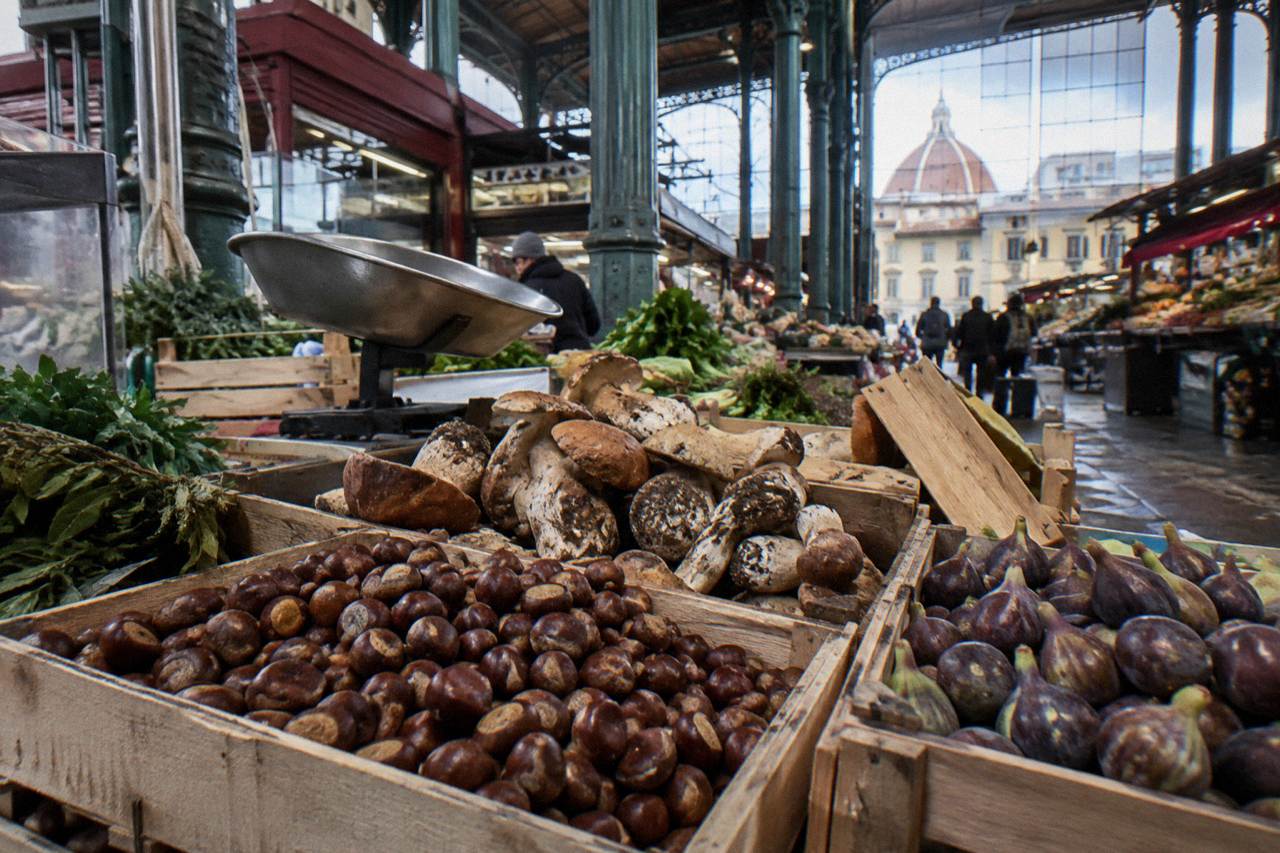
Porcini and chestnuts run September to October, with porcini starting as soon as the first September rains fall and chestnuts peaking through October. Olio nuovo, the just-pressed new olive oil, appears in late October and is at its peppery best through November. These are the three ingredients that make autumn the strongest eating season in Florence, and each has a narrow window. Truffle joins them in October at the specialist stalls. Miss the window by three weeks and you buy last year's oil or dried porcini at a price that assumes they are fresh.
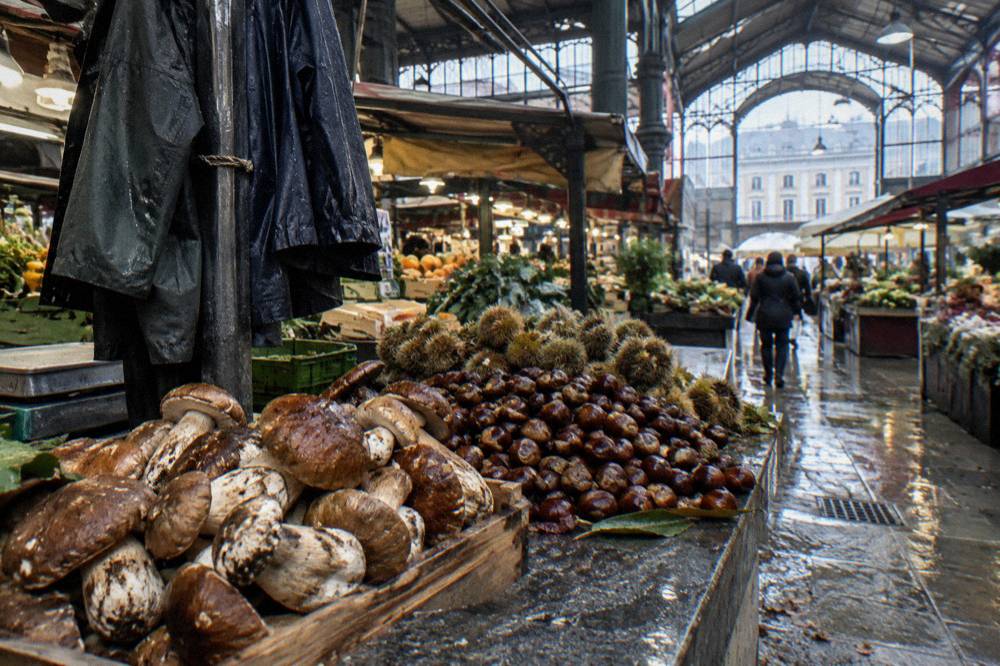
Porcini are sold whole and by weight, and a stallholder will usually cut one open to show you the white, unblemished flesh that means it was picked that morning. Avoid any with dark gills or a soft stem; that is age, not character. Chestnuts arrive in two forms here, the sweet marroni for roasting and the smaller ordinary kind for flour, and November is when the roasted-chestnut sellers appear on the streets as well.
Olio nuovo deserves its own sentence. Fresh oil is vivid green, cloudy and genuinely peppery at the back of the throat, and Tuscans treat its arrival the way other regions treat a new vintage of wine. Buy a small bottle, not a large one, because it is unfiltered and meant to be finished within a couple of months rather than cellared. Drizzle it on raw, warm beans or plain toasted bread; heat wastes it.
If that bag of porcini or that bottle of new oil is the reason you are shopping, a class that starts at the market turns it straight into dinner. These three options all pair shopping with cooking.
The autumn window also matters for pricing. September and October sit inside the March to May peak-demand stretch's opposite pole, and US search demand for Florence cooking classes runs highest in spring and lowest in December, so autumn classes fill more slowly than spring ones even though the produce is at its best.
Which Florence Market Should You Shop?
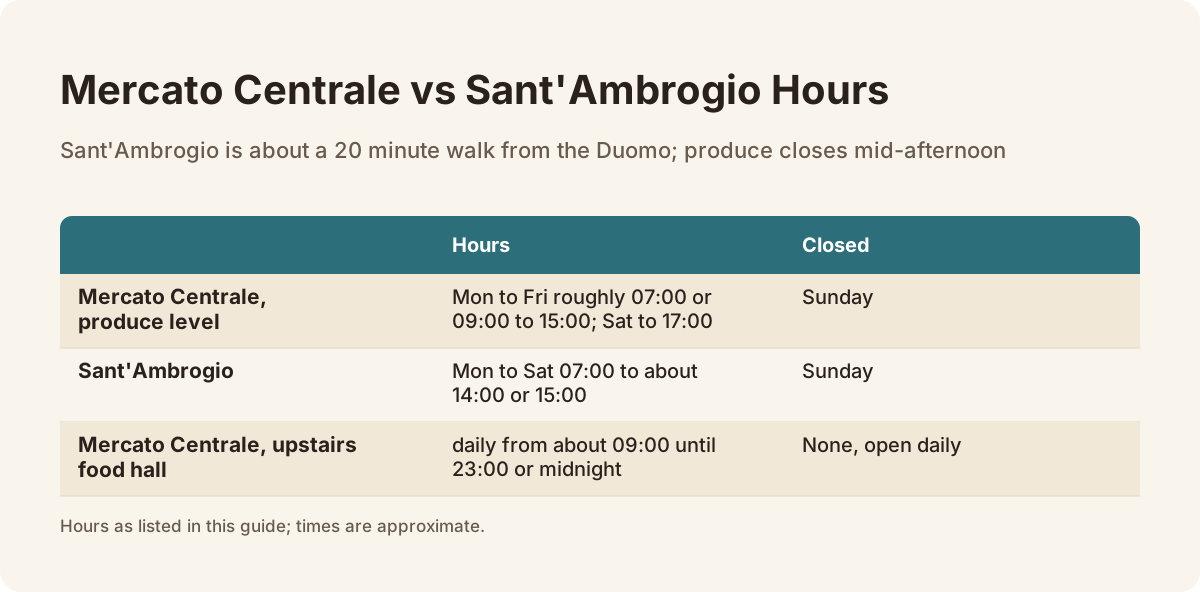
Shop Mercato Centrale for variety and late hours, and Sant'Ambrogio for lower prices and a local crowd: the ground-floor produce market at Mercato Centrale runs Monday to Friday roughly 07:00 or 09:00 to 15:00 and Saturday to 17:00, closed Sunday, while Sant'Ambrogio runs Monday to Saturday 07:00 to about 14:00 or 15:00, also closed Sunday. Sant'Ambrogio sits about a 20 minute walk from the Duomo, further out than most visitors stray, which is exactly why its prices sit lower. The hours above are the markets' published schedules; confirm on the day, since individual stall hours vary.
The official Mercato Centrale Florence site lists the full stall directory for both floors, and the upstairs food hall keeps its own longer hours, opening daily from about 09:00 until 23:00 or midnight. That split matters: the produce level closes mid-afternoon, but the cooked-food level above it runs to nearly midnight, so a late dinner built on market dishes is possible even when the raw stalls have shut. A third-party summary of Mercato Centrale's hours and stall layout tracks the same pattern.
For the differences in character, price and crowd, our two market guides go deeper: Mercato Centrale, Florence: Hours, Stalls And How To Eat It Properly covers the central option stall by stall, and Sant'Ambrogio Market In Florence: The Local Alternative To Mercato Centrale covers the one Florentines actually shop at. A first visit with limited time should split between the two: produce at Sant'Ambrogio in the morning, cooked food at Mercato Centrale in the evening.
How Do You Turn Market Produce Into Dinner?
The efficient route is a market tour and cooking class in one booking: the market tour & cooking class with wine runs 3 hours from $77 per person, rated 4.9 across 434 reviews, and walks you through the stalls with a chef before you cook and eat what you bought. It removes the two hard parts of shopping in a foreign market, reading unfamiliar produce and knowing what to do with it, and it ends with a full meal and wine. The operator is Towns of Italy and the class sits in the market-tour category on this site.
The full comparison of shopping-then-cooking options, including which market each one starts from, is in Market Tour Cooking Classes: Shopping Mercato Centrale And Sant'Ambrogio First. If a market visit does not fit your schedule, the straight pasta classes still teach the same seasonal logic: the market tour & cooking class with wine is the shopping-led version, while the pasta cooking class with unlimited wine, 2 to 2.5 hours from $40 per person and rated 4.8 across 17,143 reviews, covers the same dough skills without the shopping leg.
Season maps onto the menu. In spring, artichokes go into a pasta alla carciofi the moment you get home; in summer, nothing beats raw tomatoes torn over day-old bread for panzanella; autumn porcini belong with tagliatelle and nothing else competing. The technique is the same every month, only the produce changes.
What Should You Actually Cook Each Month?
Let the calendar drive your kitchen. From November to February, cook ribollita and bean soups; from March to May, turn to artichoke and pea pasta; from June to August, make panzanella and fresh tomato sauces; and from September to November, serve porcini tagliatelle finished with new olive oil. Every one of those dishes exists because its base ingredient floods the market at that exact moment, and every market stallholder in Florence will steer you toward the same pairings without being asked. The chart below compresses the year into the three headline windows shoppers plan trips around.
Matching the dish to the month looks like this:
| Season | Months | Star produce | Cook this |
|---|---|---|---|
| Winter greens | Nov to Feb | Cavolo nero, radicchio, leeks | Ribollita, minestrone, fagioli all'uccelletto |
| Spring | Mar to May | Artichokes, peas, asparagus | Pasta alla carciofi, risotto, peas with pecorino |
| Summer | Jun to Aug | Tomatoes, courgettes, peppers | Panzanella, pomarola, fried courgette flowers |
| Autumn | Sep to Nov | Porcini, chestnuts, olio nuovo | Porcini tagliatelle, castagnaccio, bruschetta with new oil |
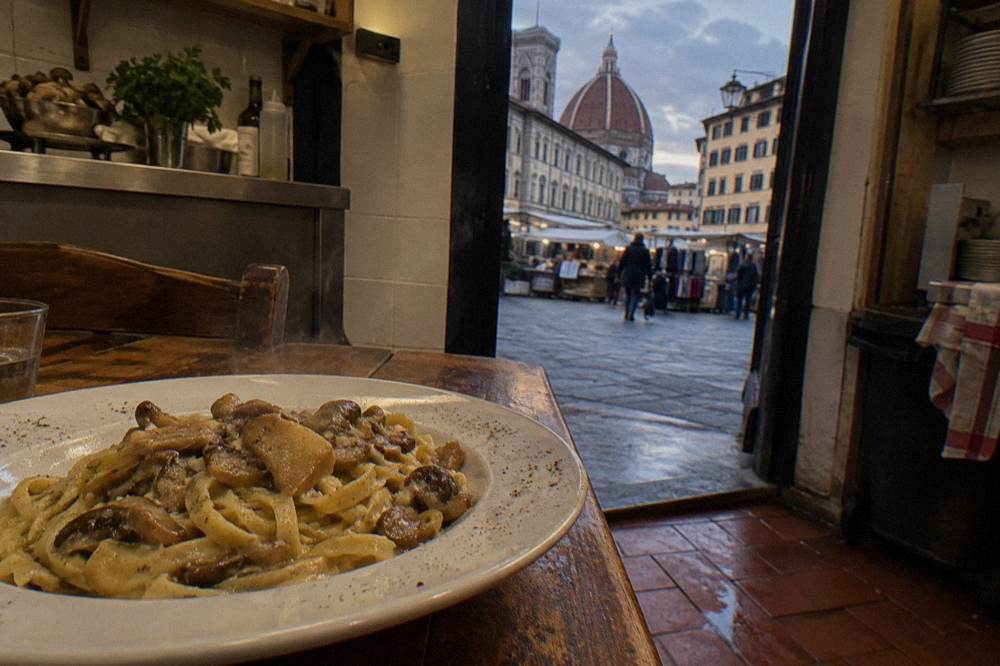
A hands-on class is the fastest way to learn those dishes rather than just eat them. The pasta and tiramisu class with unlimited wine, 3 hours from $40 per person and rated 4.9 across 8,989 reviews, teaches two shapes and the tiramisu in one sitting, which covers the dough technique all four seasonal dishes rest on.
Is A Market Tour Worth It Outside Peak Season?
Yes, and arguably more: December demand for Florence cooking classes sits at roughly 1,600 monthly US searches against 3,600 in the March to May peak, so winter classes run quieter while the stalls still carry cavolo nero, radicchio, squash and fresh olio nuovo. The produce is less showy than September's porcini, but the winter menu, bean soups and braised greens, is exactly what the region actually eats, and queues for both markets and classes are shorter. A frequently discussed thread on r/ItalyTravel asking about cooking classes in Florence, with over 420 comments, repeatedly steers travellers toward booking smaller classes in the shoulder months rather than fighting peak-season crowds.
Chestnuts and late radicchio carry December, and the new olive oil pressed in November is still at its peppery peak through the winter. February is the thinnest month on the stalls and the cheapest month for classes. Spring then rebuilds fast: the first artichokes appear in late February and the season is fully open by March.
One planning note on the official Sant'Ambrogio market page: it confirms the Monday to Saturday morning schedule and the Sunday closure, so build your shopping day around a weekday morning if produce is the goal. Both markets close on Sundays, which catches a lot of weekend visitors out.
Whichever month you land in, this site, Pasta Making Course Florence, keeps a live tour list of classes matched to each season, from the $40 group pasta sessions to the $77 market tour format. These three are the ones shoppers book most.
Common Questions About Florence Market Produce
What is in season in Florence in October?
October is the richest month: porcini mushrooms, chestnuts, truffle, squash and the first new olive oil all appear on the stalls. It is the single best month to shop Mercato Centrale or Sant'Ambrogio for cooking at home or a market-based class.
When can you buy olio nuovo in Florence?
Fresh-pressed new olive oil lands in late October and is at its best through November. Buy a small bottle, keep it away from heat and light, and use it raw rather than for cooking.
Are Florence markets open on Sunday?
No. Both Mercato Centrale's produce level and Sant'Ambrogio close on Sundays. The Mercato Centrale food hall upstairs, however, opens daily until late evening.
Which Florence market is better for produce?
Sant'Ambrogio for prices and a local crowd, about a 20 minute walk from the Duomo; Mercato Centrale for variety and its late-opening food hall. Shoppers with one morning usually do Sant'Ambrogio for raw produce and Mercato Centrale for cooked food.
What should I eat in Florence in spring?
Artichokes, asparagus, peas and broad beans, from March through May. Pasta alla carciofi and simple peas with pecorino are the dishes the season exists for.