Vegetarian And Vegan Pasta Classes In Florence: What Operators Really Offer
Updated November 3, 2026
Vegetarian pasta classes in Florence are the default rather than the exception, because Tuscan pasta shapes and their sauces lean on vegetables, cheese and olive oil. Vegan is different: the egg in fresh pasta dough is the sticking point, so most kitchens treat it as a request you make when booking.
 By Andrea Bianchi, Florence pasta-making instructor
Short answer
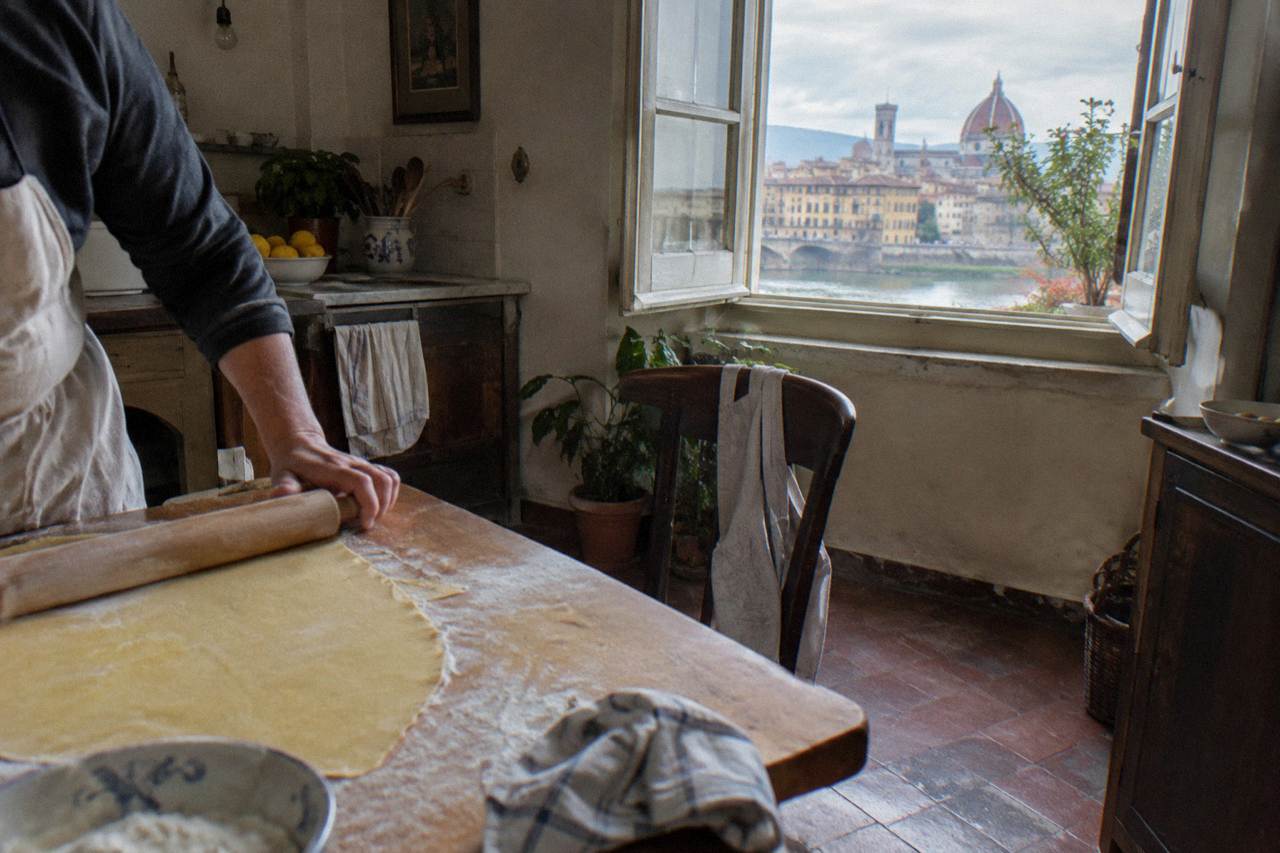
Most Florence pasta classes can serve vegetarians without any notice, since classic shapes pair with tomato, cheese and vegetable sauces. Vegan needs a request at booking, when operators swap egg dough for eggless or semolina versions. Prices run from $35 per person for group classes to $117 per person for a dedicated dietary-focused class.
Vegetarian travellers booking a pasta class in Florence have it easy: the vegetable-forward DNA of Tuscan cooking means most group classes already run vegetarian-friendly menus, and several will quietly adjust for you at the counter. Vegan is the harder ask, and it is worth understanding why before you book anything. Fresh pasta dough is traditionally egg-based, so a vegan class means the kitchen substitutes an eggless dough, and not every operator keeps one on hand. The pasta and tiramisu class with unlimited wine, from $40 per person and rated 4.9 across 8,989 reviews, is one of several classes that take diet requests when you book, which is the moment to state vegan rather than hoping on arrival.
Is A Vegetarian Pasta Class In Florence Easy To Find?
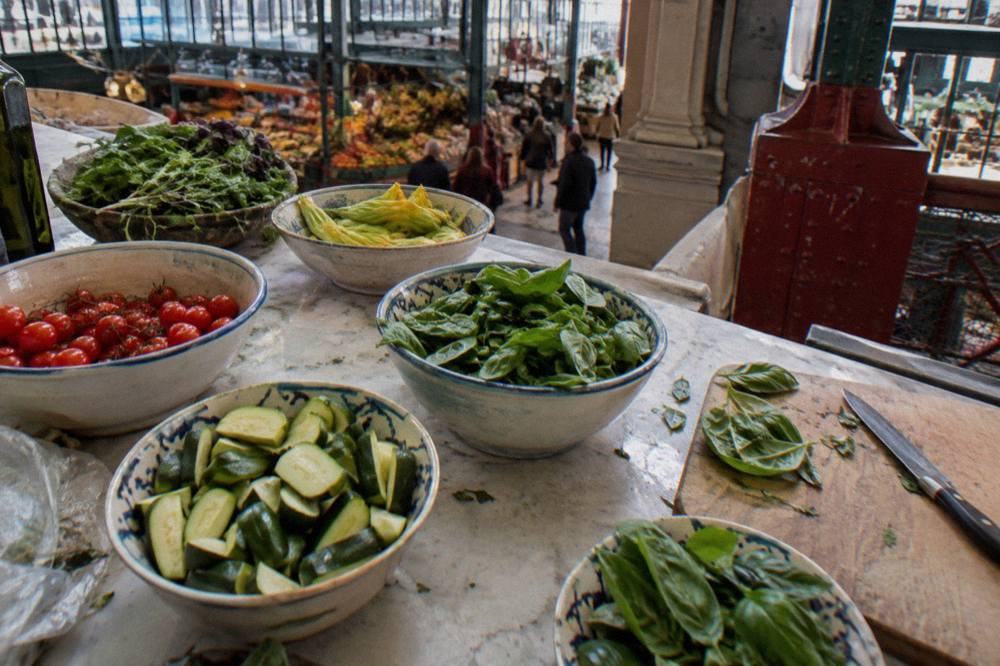
Yes, and in most group classes you barely need to ask. Tuscan pasta canon includes tomato and basil, ricotta and spinach ravioli, and potato tortelli, none of which require meat, so the standard menu at most Florence classes already suits vegetarians. The practical rule is simple: mention vegetarian when you book, expect the class to run its normal menu or a close variant, and only pay a dedicated dietary premium when cross-contact or a fully vegan menu is involved.
The reason this works is structural rather than generous. Pasta making classes in Florence teach dough and shapes first, sauce second, and the sauces taught on group courses are overwhelmingly vegetable, cheese and tomato based. Meat ragu does appear on some menus, but operators treat it as one sauce option among several rather than the centerpiece. When a class offers a choice of sauces, vegetarians simply pick the tomato or cheese option and lose nothing from the experience.
That said, "widely available" is not the same as "universal". The two things worth checking on a live listing are whether the tiramisu course has a vegetarian or eggless variant, since tiramisu is built on eggs and mascarpone, and whether the wine poured alongside is part of the meal regardless of menu. Most listings state dietary handling in the inclusions or notes field, and the ones that do not usually answer the question within a day through the listing's messaging. The pasta and tiramisu class with unlimited wine is a good example of the pattern: a fixed-format class where diet requests are fielded at booking time rather than turning anyone away.
Travellers ask about this repeatedly on Reddit, in threads like r/ItalyTravel's long "Cooking class in Florence" discussion, where vegetarians weigh in alongside everyone else on which kitchens accommodated them without fuss. The consistent gist of those threads is that vegetarian is a non-issue in Florence and vegan is the one that needs advance work.
Can You Take A Vegan Pasta Class, Or Only Vegetarian?
Vegan classes exist, but usually as a modification to a regular class rather than a separately ticketed product. The technical hurdle is the egg in fresh pasta dough, and kitchens that handle vegan requests substitute an eggless or water-and-semolina dough, often handmade per booking. The reliable approach is to request vegan at the time of booking and confirm the substitution in writing on your confirmation, not at the kitchen door.
Some operators publish their dietary handling directly. Mama Florence, for instance, runs a dedicated gluten-free cooking class and states that its regular classes can accommodate gluten-free guests for an added EUR 20 per person, which shows the shape of the market: dietary needs are priced as modifications, not barriers. The same logic extends to vegan, where the kitchen's cost is a separate dough batch and a menu tweak rather than a whole new product, so operators quote it as a supplement or simply absorb it. Their published class page is the place to verify current terms before booking: Mama Florence's dietary accommodation page.
The vegan pitfalls are predictable. Tiramisu, the dessert half of most pasta-and-tiramisu classes, contains egg and dairy in every traditional version, so a vegan booking usually means a fruit dessert or a dairy-free variant, ask which. Pecorino and Parmigiano appear in finished pasta dishes and are not vegan because of animal rennet, so confirm the kitchen uses a plant-based cheese or serves the sauce plain. Wine is generally fine, but some classes finish dishes with butter, and a vegan request should flag it.
One Florence operator, 360 Cooking Class Experience, publishes its slot times and dietary terms on its own site, and its model of daily 10:00, 13:30 and 17:00 sessions with dietary requests handled per booking is representative of how the city's kitchens manage this. Details are on the operator's own class page.
What Does A Dietary-Accommodating Class Cost In Florence?
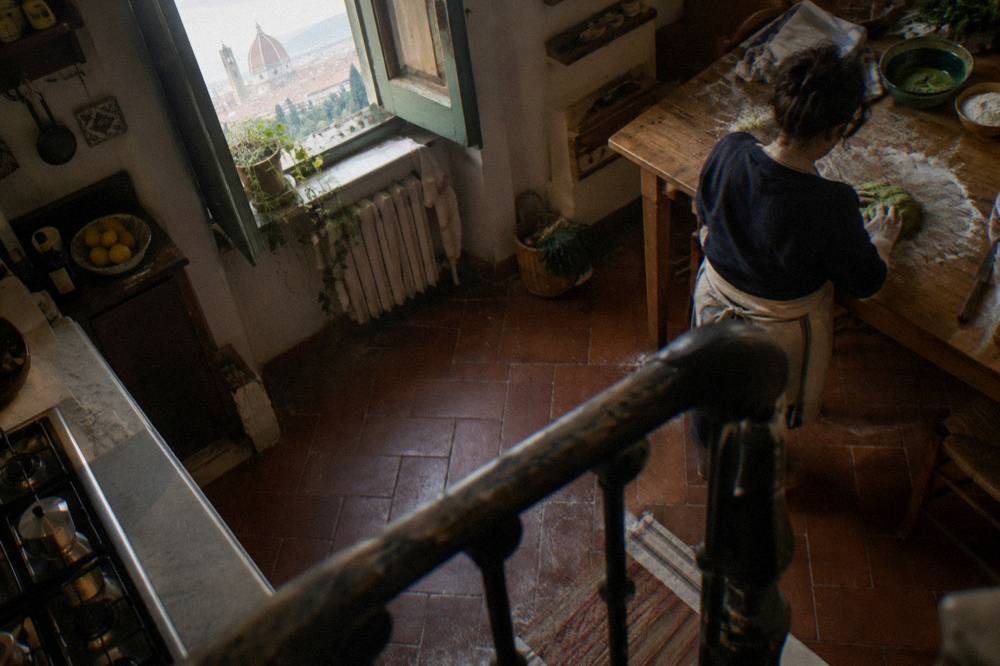
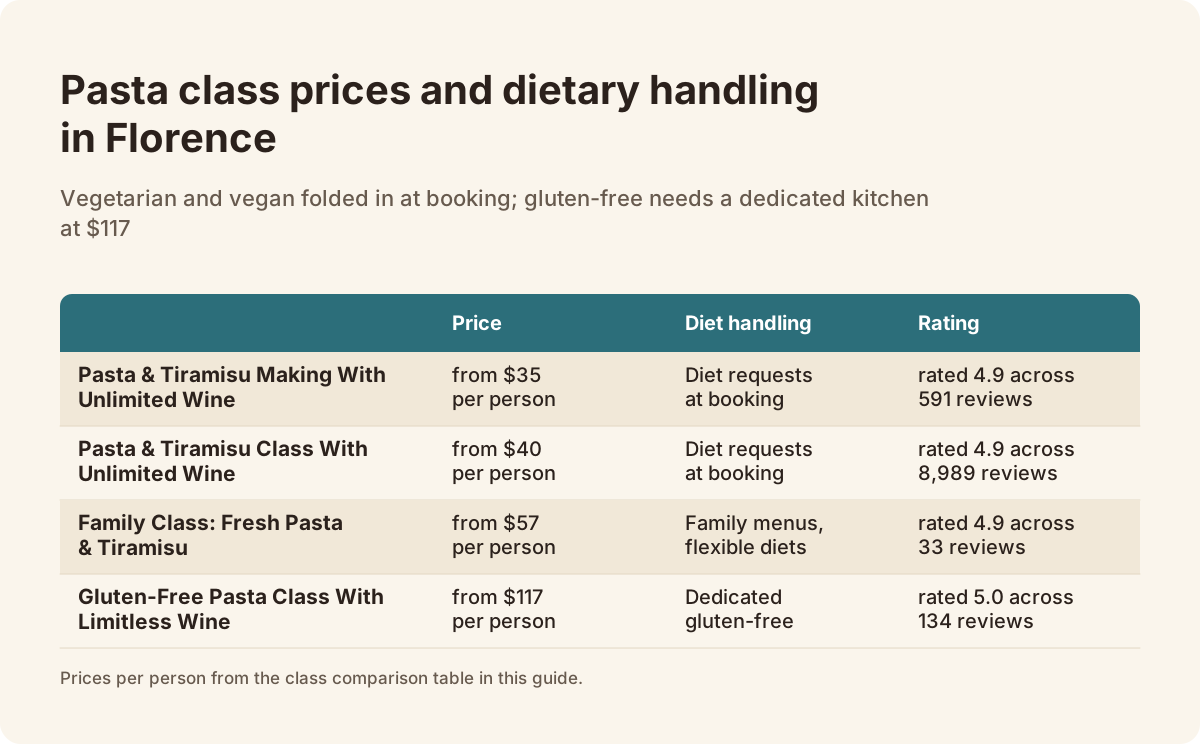
Group classes that handle vegetarian at no charge start at $35 per person, while a dedicated dietary-focused class runs to $117 per person. Between those poles, most group pasta and tiramisu classes sit at $35 to $58 per person with diet requests folded in at booking. The premium only bites when you want a kitchen built around a specific diet rather than a standard class with a swap.
| Class | Operator | Price | Diet handling | Rating |
|---|---|---|---|---|
| Pasta & Tiramisu Making With Unlimited Wine | Rosso Crudo | from $35 per person | Diet requests at booking | rated 4.9 across 591 reviews |
| Pasta & Tiramisu Class With Unlimited Wine | Cooking Italy | from $40 per person | Diet requests at booking | rated 4.9 across 8,989 reviews |
| Family Class: Fresh Pasta & Tiramisu | Cooking zone | from $57 per person | Family menus, flexible diets | rated 4.9 across 33 reviews |
| Gluten-Free Pasta Class With Limitless Wine | Florence Untold | from $117 per person | Dedicated gluten-free kitchen | rated 5.0 across 134 reviews |
The table shows the honest structure of the market. Vegetarian and vegan handled as a booking request costs you nothing beyond the normal class price, which is why the $35 Rosso Crudo class and the $40 Cooking Italy class are the volume plays. The gluten-free column is instructive for vegan travellers too, because a kitchen that segregates allergens, like Florence Untold's dedicated setup, is the kind most likely to take an eggless dough seriously rather than as an afterthought. The Rosso Crudo pasta and tiramisu class pairs the lowest entry price on this list with the unlimited wine format, which suits a dinner-slot booking.
For context on the private end, Pasta Class Florence lists private sessions from EUR 900 per group of up to six, and while that is aimed at premium buyers rather than diet-driven ones, a private kitchen is the most controlled environment for multiple allergies at once. Reading the fuller cost breakdown in gluten-free cooking class pricing and cross-contamination rules helps if your needs overlap with celiac concerns.
Which Dishes Will You Actually Make As A Vegetarian Or Vegan?
Expect the classic Tuscan vegetarian canon: egg pasta dough rolled into tagliatelle or ravioli, paired with tomato and basil sauce, ricotta and spinach filling, or a seasonal vegetable sauce, followed by tiramisu where the class includes dessert. Vegans get the same shapes in an eggless dough, with dairy-free sauce and dessert swaps confirmed at booking.
| Course element | Standard version | Vegetarian handling | Vegan handling |
|---|---|---|---|
| Pasta dough | Flour and eggs | Unchanged, eggs included | Eggless water-and-semolina dough, prepared per booking |
| Sauce | Tomato and basil, or ragu | Tomato, cheese or vegetable sauce | Tomato and olive oil base, no butter finish |
| Filled shapes | Ricotta and spinach ravioli | Unchanged | Plant-based filling confirmed in advance |
| Dessert | Tiramisu with eggs and mascarpone | Unchanged | Fruit dessert or dairy-free variant, confirmed at booking |
| Wine pairing | Regional wine poured with the meal | Unchanged | Unchanged |
The dough itself is where vegan and vegetarian paths split. A standard fresh pasta dough is flour plus eggs, which vegetarians eat without issue, and many Florence classes teach a spinach version that stays firmly vegetarian. Vegan dough replaces the eggs with water and sometimes semolina, which changes the texture slightly, firmer, less golden, and a good instructor will teach it as its own technique rather than apologizing for it. If the class you are eyeing markets itself on silken egg tagliatelle, expect the vegan variant to be a conscious departure.
Sauces are the easy part. Tomato and basil is vegan as cooked in most Florentine classes, olive oil and garlic based vegetable sauces suit both diets, and the seasonal calendar that matters here runs porcini and chestnuts in September and October, new olive oil in October and November, and spring artichokes later in the year. A class that shops its own produce will build the sauce list around whatever is in the market that week, which favors vegetarian diners by default.
Dessert is the honest sticking point. Tiramisu needs eggs and mascarpone, so vegetarian guests are fine and vegan guests need the substitute confirmed in advance. Some kitchens offer a fruit-based alternative, others attempt a dairy-free version, and a few simply extend the pasta course. None of these outcomes is bad, but knowing which you are getting prevents a flat end to an otherwise strong class.
How Do You Book So The Kitchen Actually Accommodates You?
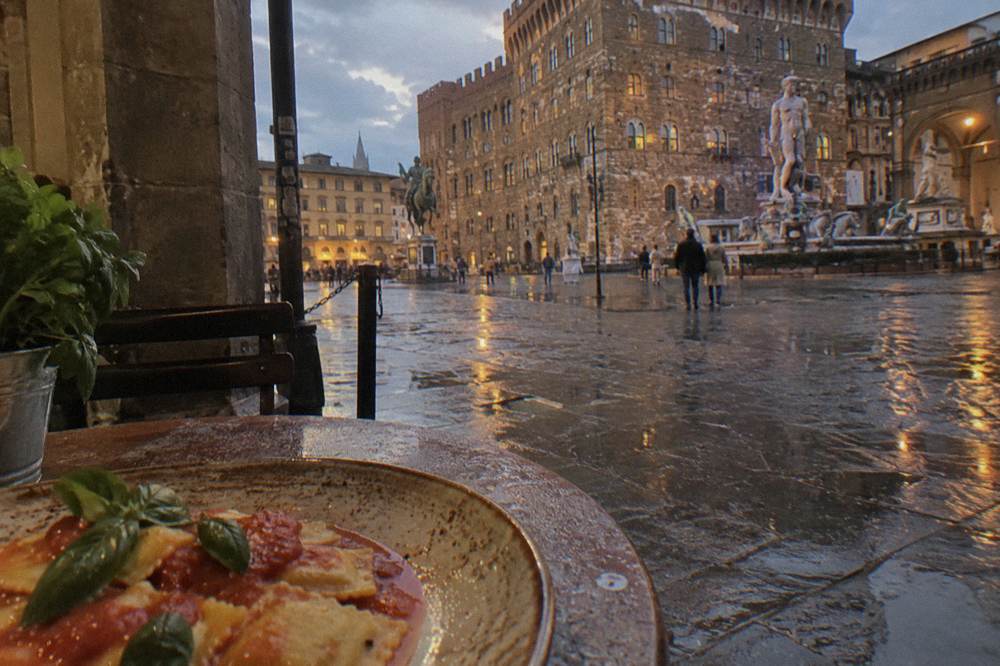
State the diet in the booking form's notes or messaging field, then confirm the reply in writing before the class date, and only then treat the booking as settled. Booking platforms pass operator messages both ways, so the confirmation trail exists and is worth keeping. Aim to make the request at least a few days ahead, since eggless dough and vegan desserts are prepared per booking, not stocked.
The failure mode travellers report is arriving with a diet noted nowhere except their own memory. Kitchens shop and prep per session, and a vegan surprise at 17:00 means the instructor improvises with whatever is on hand. A written request days ahead means the dough is ready when you are. The second failure mode is ambiguity: "vegetarian" is understood everywhere, but specify whether you eat eggs and dairy, because in Italy "vegetariano" defaults to including both, and the confusion usually surprises Americans expecting something stricter.
Families have an extra wrinkle worth planning. Children's rates and age minimums vary by operator, and combining a kids' booking with a vegan request doubles the coordination, so it pays to read age limits and pricing for kids' cooking classes before choosing a family slot. The family class by Cooking zone, from $57 per person, handles both, but a clear written request still does the heavy lifting.
Finally, dietary overlap changes the recommendation. A vegetarian who is also gluten-free has a genuinely different problem from a plain vegetarian, because cross-contact with flour dust is the issue, not the menu. That reader should start from gluten-free and vegan pasta class options in Florence and consider a dedicated kitchen like the Florence Untold class rather than a modification at a standard one. Tipping, for what it is worth, is optional in these classes, with operators citing typical amounts of EUR 10 to 15 per person for those who choose to.
Vegetarian, Vegan Or Gluten-Free: Which Class Type Fits?
Vegetarians can book almost any group class from $35 to $58 per person and simply note the diet. Vegans should book classes with confirmed eggless dough and dessert swaps, using written confirmation. Gluten-free diners need a segregated kitchen at the $117 dedicated-class level, because flour cross-contact makes a menu swap insufficient. Match the class type to the diet, not the other way around.
The decision rule is short. If your diet is vegetarian, optimize for schedule, price and format: the $35 to $40 group classes with unlimited wine are strong value and the diet is a non-event. If it is vegan, optimize for confirmation quality, meaning choose an operator that answers the eggless question specifically, in writing, before you pay. If it is gluten-free, optimize for the kitchen, not the menu, because a shared prep space with airborne wheat flour is the actual risk and no sauce swap fixes it.
A mid-range compromise exists for the undecided: the pasta and tiramisu format at $35 to $40 per person, booked with the diet noted, is cheap enough to treat as an experiment and popular enough, at 4.9 across thousands of reviews for the Cooking Italy version, that the format is well rehearsed. Each class page on Pasta Making Course Florence lists each class's dietary handling alongside price and duration so you can compare without opening a dozen tabs.
Common Questions About Vegetarian And Vegan Pasta Classes In Florence
Is A Vegetarian Pasta Class In Florence Easy To Find?
Yes. Most group classes teach vegetable, cheese and tomato based sauces by default, so vegetarians can book nearly any class and simply note the diet. Prices start at $35 per person for group formats.
Can You Take A Vegan Pasta Class, Or Only Vegetarian?
Vegan is usually a modification to a regular class rather than a separate product. The kitchen substitutes eggless dough and a dairy-free sauce and dessert, confirmed in writing at booking. Ask specifically about the tiramisu, since it contains egg and mascarpone.
What Does A Dietary-Accommodating Class Cost In Florence?
Group classes handling vegetarian and vegan requests run from $35 to $58 per person. A dedicated gluten-free class, where cross-contact is controlled rather than just the menu, costs from $117 per person.
Do You Need To Tell The Class About Your Diet In Advance?
Yes, and in writing. Kitchens prep per session, so vegan dough and dessert swaps are prepared per booking. Request it at least a few days ahead and keep the confirmation.
Is Vegetarian Tiramisu Included In The Class?
Traditional tiramisu is already vegetarian, built with eggs and mascarpone, so vegetarians are covered. Vegans need a confirmed substitute, either a fruit dessert or a dairy-free variant, depending on the kitchen.