Pasta & Tiramisu Classes With Unlimited Wine: The Florence Double Bill
Two courses and two skills: compare pasta-and-tiramisu classes by duration, menu and inclusions.
 By Andrea Bianchi, Florence pasta-making instructor
Short answer
Cooking Italy’s pasta-and-tiramisu class lasts three hours; Rosso Crudo’s version lasts 2½ hours and allows up to 50 guests. Both advertise unlimited wine and the meal you prepare. Check current prices, non-alcoholic drinks, participant requirements and cancellation terms for your option.
The tiramisu goes together fast, which surprises everyone. Twenty minutes after the pasta water goes on, you are whipping mascarpone into egg and sugar, dragging savoiardi through coffee, and building layers into a dish that will sit in the fridge while you eat what you rolled an hour earlier. Two courses, two completely different skills, one bill.
At A Glance: Rosso Crudo fits handmade pasta, tiramisu and unlimited wine into a 2½-hour class; Cooking Italy offers a three-hour alternative. Explore Florence Pasta & Tiramisu Cooking Class with Unlimited Wine
Cooking Italy and Rosso Crudo both teach pasta and tiramisu with unlimited wine. Their verified durations differ: three hours and 2½ hours respectively. The price and review figures below are an August 2026 comparison snapshot; check the current total and recent reviews for your date.
Which Of The Two Pasta And Tiramisu Classes Should You Book?
Choose Cooking Italy for a three-hour pasta-and-tiramisu session, or Rosso Crudo for a 2½-hour version. Compare the current total, meeting point and group format rather than inferring quality from the historical price gap.
The decision comes down to two numbers and one preference. Eight thousand reviews versus four hundred is a difference in certainty, not in average experience, because both sit at 4.9. Thirty minutes is a difference in pace: the longer class has more room between courses, the shorter one moves.
| Pasta & Tiramisu Class with Unlimited Wine | Pasta & Tiramisu Making with Unlimited Wine | |
|---|---|---|
| Operator | Cooking Italy | Rosso Crudo |
| Rating | 4.9 | 4.9 |
| Reviews | 8,219 | 435 |
| From | $49 | $35 |
| Length | About 3 hours | 2h30 |
| Wine | Unlimited wine; confirm non-alcoholic inclusions | Unlimited wine; confirm non-alcoholic inclusions |
| Cancellation | Free up to 24 hours ahead | Free up to 24 hours ahead |
| Best for | A full evening out with dessert built in | Fitting a real class into a tight day or budget |
The key verified difference is duration: three hours for Cooking Italy versus 2½ hours for Rosso Crudo. Compare the total for your date, then choose the schedule and menu that fit; review count alone does not quantify the chance of a disappointing class.
Review counts cannot tell you how many guests will share your table. Rosso Crudo’s listing allows up to 50 participants; Cooking Italy’s group limit needs confirmation for the option you choose. Our ranking of every bookable Florence class and the short answer on which class is best compare formats, not guaranteed room sizes. Related reading: ranking of every bookable Florence class, the short answer on which class is best.
You can compare both against each other on the homepage, where the dessert-inclusive classes sit together, or go straight to the larger one and see dates and the current price for your evening.
What Does "Unlimited Wine" Actually Mean In A Florence Class?
Unlimited wine means wine is included during the experience rather than priced by the glass. It does not automatically establish a sommelier-led tasting or included soft drinks; verify the non-alcoholic options on your selected listing.
The phrase does a lot of work in listings, so here is the plain reading. These are cooking classes with drinks included, not drinking events with cooking attached. The wine appears early, usually while your hands are still in flour, and keeps appearing through the meal at the end. Nobody is counting your glasses, and nobody is going to describe the terroir either.
Where operators differ is in what else is covered, and that varies more than the wine does.
Two practical consequences follow. Confirm the non-alcoholic options if anyone is not drinking wine, and remember that the class includes eating what you make. Leave the full session free instead of booking an overlapping restaurant table.
If dessert is not the point for you and the wine is, the classic unlimited-wine sessions run the same drink policy for $37 and skip the tiramisu entirely.
What Is Included, And What Do You Need To Bring?
Nothing but yourself. Both classes provide apron, ingredients and all equipment, and both cancel free up to 24 hours before the start. Dress is comfortable clothes and closed-toe shoes, with no formal requirement. The wine and the meal you cook are in the price, and neither class includes transport, because both are city sessions you walk to.
The included list is where the two classes look most alike, which is useful: it means the choice really is about time and price rather than about what you get. The table below sets them against the classic pasta class so you can see what the dessert course adds and what it does not.
| Included | Pasta & Tiramisu, $49 | Pasta & Tiramisu, $35 | Classic pasta class, $37 |
|---|---|---|---|
| Apron | Yes | Yes | Yes |
| All ingredients | Yes | Yes | Yes |
| All equipment | Yes | Yes | Yes |
| Unlimited wine | Yes | Yes | Yes |
| Soft drinks | Confirm with the operator | Confirm with the operator | Yes |
| Dessert course | Yes, tiramisu | Yes, tiramisu | No |
| The meal you cook | Yes | Yes | Yes |
| Free cancellation, 24h | Yes | Yes | Yes |
| Transport | No | No | No |
Read the bottom rows together and the value question answers itself. At $49 you are paying $12 above the benchmark class for a second course and a second technique. At $35 you are paying less than the benchmark and giving up thirty minutes. There is no version here where the dessert costs you a lot, which is why this category is the busiest part of the Florence class market after the plain pasta evenings.
Both are city classes with a specified meeting point. Rosso Crudo publishes a shared-tour maximum of 50, while the chef masterclass in the premium end of the market caps at 13. Neither pasta-and-tiramisu listing establishes a dedicated celiac-safe kitchen. Related reading: the premium end of the market.
One thing worth setting expectations on: the tiramisu you assemble usually needs to set. Different operators handle that differently, so if you have a specific hope about eating your own dessert at the end of your own class rather than a portion made earlier, ask the operator on the booking page before you commit. Neither listing publishes a rule for it.
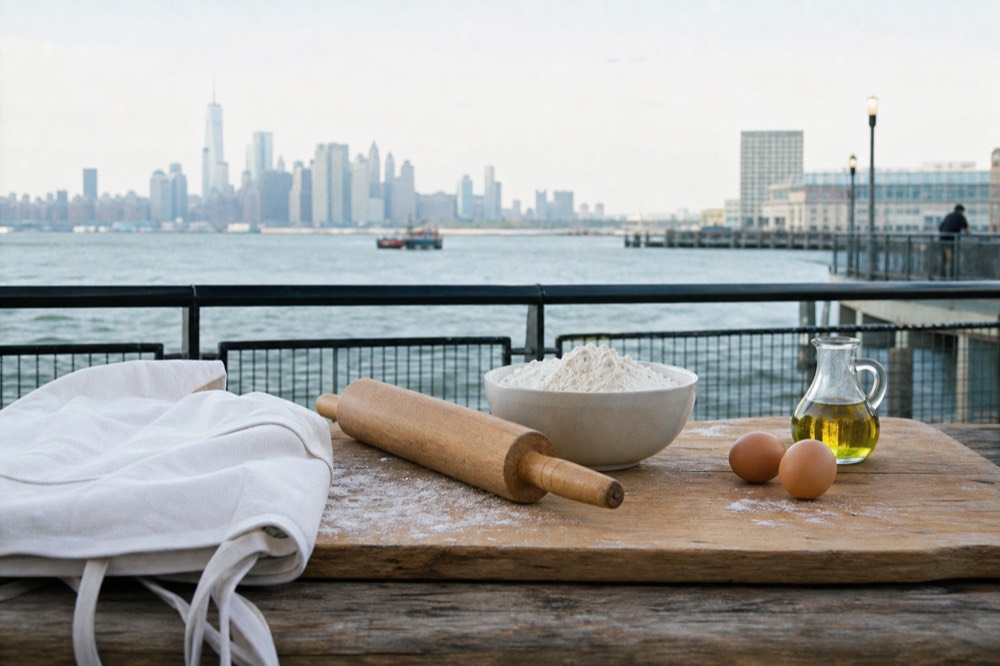
Where Does Tiramisu Come From, And What Will You Actually Make?
Tiramisu is not Tuscan. It first appeared on a menu at Le Beccherie in Treviso in 1972, created by Alba Campeol and Roberto Linguanotto, well north of Florence. The pasta half of the class is the local part: Tuscany's own shapes are pici, the hand-rolled thick spaghetti associated with Siena, and pappardelle, the broad ribbons found across the region.
You are learning one dish that belongs to the hills outside the window and one that arrived from the north within living memory. NPR's account of the dish's origin puts the 1972 date on the record, which makes tiramisu younger than most of the restaurants serving it.
The pasta side has deeper roots and a technical fork worth understanding before you stand at the board.
| What you are working with | Detail | Why it matters in class |
|---|---|---|
| Tipo 00 flour | Soft wheat, roughly 9 to 11% protein | The flour for egg pasta and pastry, softer and more forgiving under the pin |
| Semola rimacinata | Durum wheat, roughly 13 to 14% protein | The flour for water-based shapes, firmer, gives more bite |
| Pici | Hand-rolled thick spaghetti of flour, water and oil, typical of Siena | The Tuscan shape that needs no machine and no egg, all palms |
| Pappardelle | Broad ribbons, egg or water and flour, found across Tuscany | Cut from a rolled sheet, the shape most classes end up making |
| Tortelli mugellani | Square pasta filled with potato, from the Mugello area | The regional filled shape, rarely on a three-hour syllabus |
| Egg versus water dough | Egg pasta predominates in northern Italy, water and semolina in the south | Explains why two Florence classes can teach different doughs and both be right |
There is a small piece of context that makes the pairing feel less arbitrary once you know it. Italy eats 23.3 kg of pasta per person per year, the highest figure in the world, so the pasta half of your class is genuinely daily food rather than a special occasion. The tiramisu half is the opposite: a restaurant invention from 1972 that spread fast enough to feel ancient. Learning them together in one room is a neat compression of Italian food history, the very old technique and the very new dessert, taught by the same person in the same three hours.
If you want the split explained properly, Visit Tuscany's guide to the region's pasta shapes covers pici and pappardelle, and the flour comparison at Eating Around Italy is where the protein figures come from. Knowing which bag your chef reaches for tells you in advance what your hands are in for: egg dough is soft and rolls out, water dough resists and gets rolled by hand.
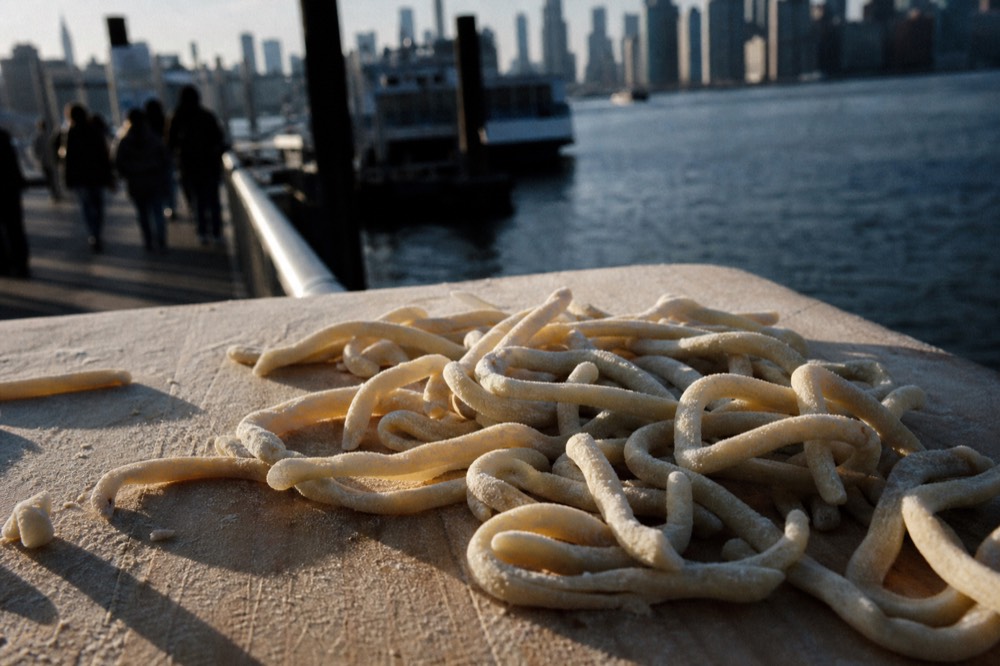
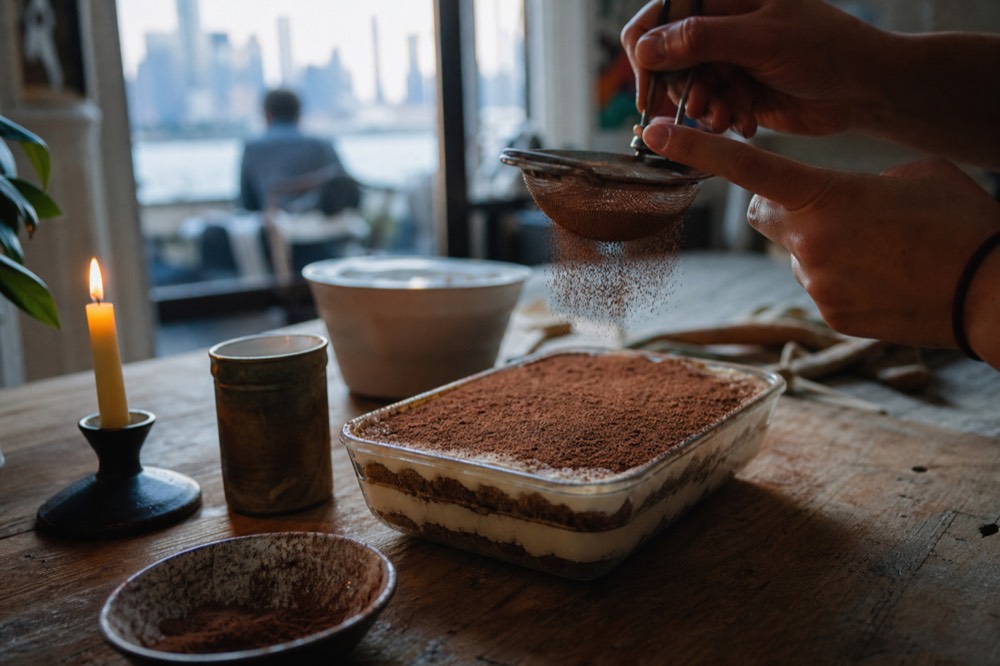
How Does A Dessert Course Fit Into Three Hours?
A dessert-inclusive class is not a pasta class with twenty minutes bolted on. Tiramisu is assembled cold and needs no cooking, so it slots into the gaps: it usually gets built while dough rests or sauce reduces. That is how a three-hour class carries two courses without either feeling rushed, and how the 2h30 version carries them at all.
The structural logic is worth understanding because it tells you what a shorter class gives up. Fresh pasta has enforced waiting built into it. Dough rests. Water boils. Sauce cooks down. In a pasta-only class those gaps are filled with wine and talking. In a double bill, they are filled with mascarpone.
| Stage | The 3-hour class | The 2h30 class |
|---|---|---|
| Arrival and setup | Unhurried, wine poured early | Brisker, straight to the board |
| Pasta dough | Full mixing, kneading and resting | Same steps, less standing about |
| Dessert build | Assembled in the resting gaps | Assembled in the resting gaps, tighter |
| Shaping and saucing | Room to redo a bad sheet | One pass, keep moving |
| Sitting down to eat | A proper meal with refills | A proper meal, shorter at the table |
| Total on the clock | About 3 hours | 2h30 |
These two hands-on pasta-and-tiramisu classes last three hours and 2½ hours, including the meal. Other city classes can be shorter or longer; our timing breakdown for cooking classes compares those formats with market courses and farm days. Related reading: our timing breakdown for cooking classes.
When Is A Different Class The Better Booking?
Skip the double bill if dessert is not the draw: the pasta-only classic costs $37 with 14,815 reviews behind it. Take the family class at $57 if children are coming, because it pours juice for kids and wine for adults. Take the $109.50 chef masterclass if you want technique and a room capped at 13 rather than a second course.
There is no version of this category that is wrong, only versions that are wrong for a particular table. The question to ask is what you would rather have more of: food, evidence, attention, or time back.
A family-focused format can be worth comparing when children are travelling, but minimum ages and supervision rules still need checking for the exact class. Our guide to classes that work with kids covers those questions, and every class in Florence compared shows the wider range. Related reading: Our guide to classes that work with kids, every class in Florence compared.
For the shorter, cheaper end of this category, you can check what your date has open before you decide, since 2h30 slots move differently from full evenings.
What Should You Settle Before You Book?
Confirm four things: the start time against your dinner plans, whether anyone in the group needs a gluten-free kitchen, the ages of any children, and the 24-hour cancellation window. Everything else is handled for you, since both classes supply apron, ingredients and equipment, and neither asks for more than comfortable clothes and closed-toe shoes.
The pre-booking checklist for this category is short because the operators have removed most of the friction. What is left is scheduling and dietary reality.
| Question | The answer for both classes | Act on it |
|---|---|---|
| What time does it end? | The 3h class ends after a full meal; the 2h30 one ends after a shorter one | Do not book a restaurant table the same night |
| Can I cancel? | Free up to 24 hours before the start | Check the payment terms and cancellation deadline |
| What do I wear? | Comfortable clothes and closed-toe shoes, no formal requirement | Skip the good shirt, flour travels |
| Can children join? | Check the selected class’s age and supervision rules | Compare a family format and verify participant ages |
| Celiac in the group? | These are standard kitchens | Discuss cross-contact controls with the operator before booking a gluten-free class |
Once your travel date is fixed, compare actual start times and the cancellation terms. A refundable booking still has a deadline, and payment timing can vary; review those details before committing.
Choose the 2½-hour version when that total fits your day, and the three-hour option when you prefer the longer schedule. Duration alone does not establish portion size, individual teaching time or how rushed either class will feel.
Both listings explicitly teach pasta and tiramisu, so dessert is part of the advertised lesson rather than an assumed extra. Choose between their actual dates and durations, with the pasta-only benchmark as a separate alternative if dessert is not your priority.
Choose Your Florence Class
Check your Florence date for the 2½-hour Rosso Crudo class before reserving dinner: pasta and tiramisu are already part of the meal.
Florence Pasta & Tiramisu Cooking Class with Unlimited Wine
Make fresh pasta and tiramisu, then sit down to dinner with unlimited wine.
2.5 hours. English option. Meet at Rosso Crudo, Via dei Servi 85 red, Florence.
Compare The Formats And Fit Your Day
| Experience | Time And Format | What You Get | Before Booking |
|---|---|---|---|
| Florence Pasta & Tiramisu Cooking Class with Unlimited Wine | 2.5 hours; Shared class | Make fresh pasta and tiramisu, then sit down to dinner with unlimited wine. | |
| Pasta & Tiramisu Cooking Class with Unlimited Wine | 3 hours; Shared class | Fresh pasta and tiramisu cooking; Meal and dessert. | Confirm the selected venue and dietary requests before booking. |
Before arranging the rest of your day, check dates for Florence Pasta & Tiramisu Cooking Class with Unlimited Wine.
Check Class Dates